

AI search could not be completed. Please try again or adjust your search.
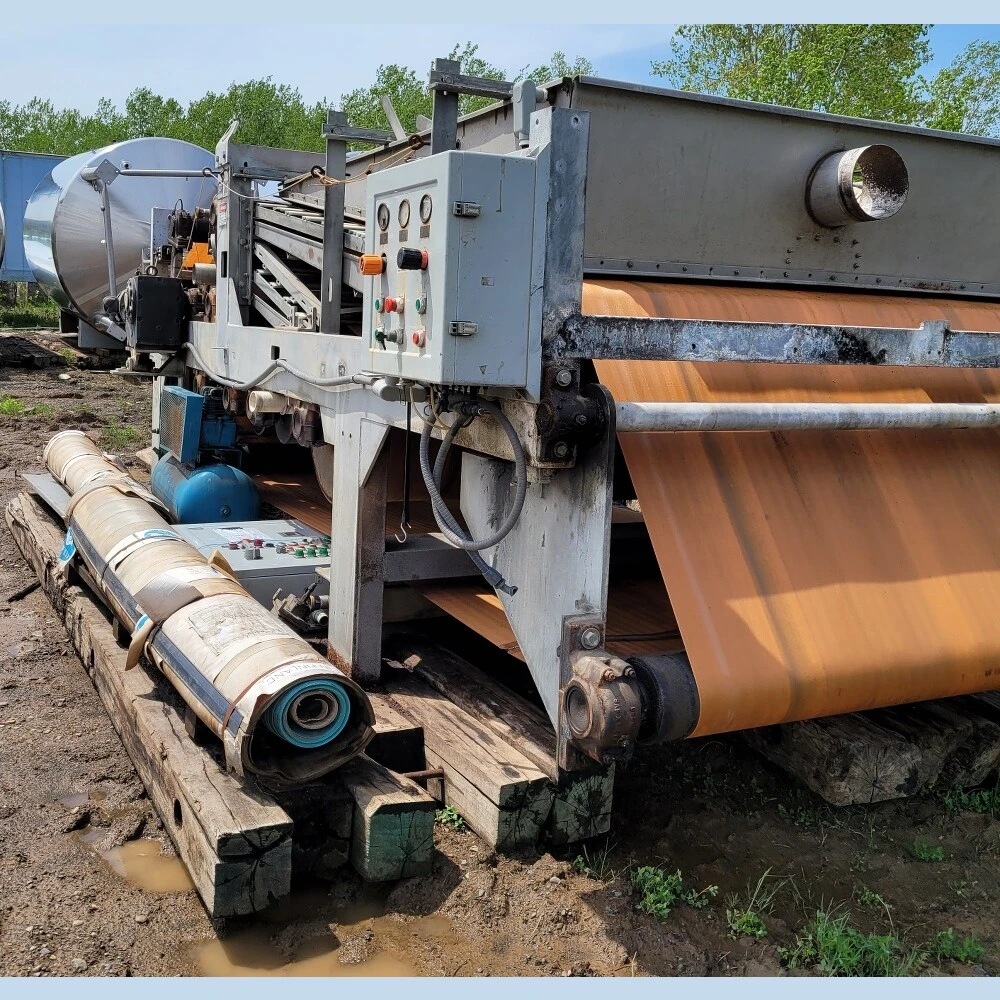
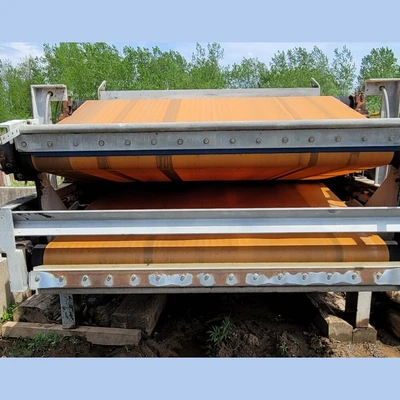
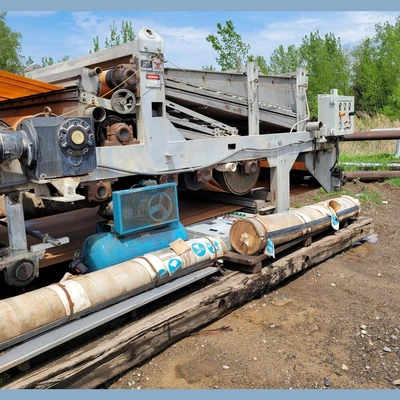
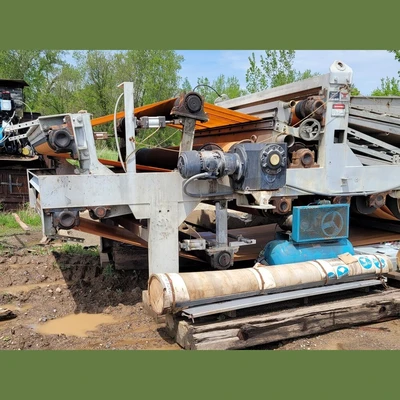
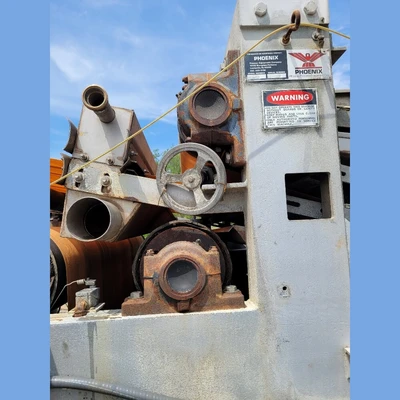
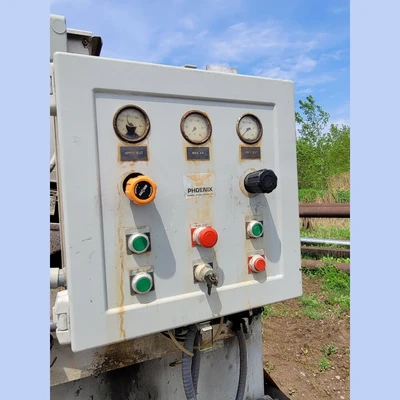
Phoenix WX Belt Filter
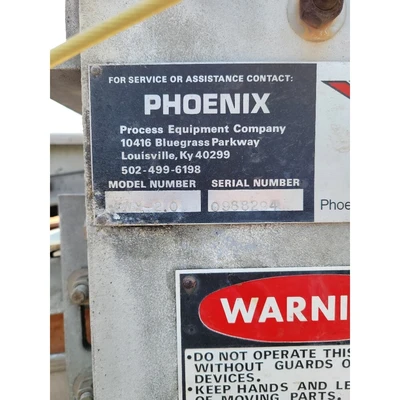
Make: Phoenix Process Equipment
Model: WX-2.0 Belt Filter
Size: 2.0 Meters
Condition: Used Condition - Fully Operational When Removed
Previous Use: Produced Dewatered Sludge for Disposal
Comes with:
Control Cabinet for Operation
Small Air Compressor
Set of Spare Belts
Control Cabinet for Operation
Small Air Compressor
Set of Spare Belts
Features:
Heavy All-Welded Main Frame
Modular Construction
Continuous Automatic Operation
Open Design
Epoxy Over Zinc Coated Frame
Pneumatic Belt Tracking/Tensioning
Standard, Extend, Independent or Dual Gravity Zone
Heavy All-Welded Main Frame
Modular Construction
Continuous Automatic Operation
Open Design
Epoxy Over Zinc Coated Frame
Pneumatic Belt Tracking/Tensioning
Standard, Extend, Independent or Dual Gravity Zone
Description:
1. Preconditioning (Flocculation): Most applications require the addition of polymers to the slurry prior to dewatering. The addition of these flocculants results in the agglomeration of solids, releasing free moisture. An inline mixer is provided for proper dispersal of polymer into the feed.
2. Feed Distribution: The slurry is fed to a specially designed head box, where the material is evenly distributed for more efficient use of the filtering area.
3. Gravity Drainage: Free moisture is separated from the solids by drainage through the moving filter belt.
4. Wedge Pressure: Material advancing from the drainage zone is deposited into the adjustable wedge zone. Pressure is gradually applied as the upper and lower belts converge to form a “cake sandwich.”
5. Compression/Shear: The belts then follow an “S” path through a series of compression rollers. The surface pressure created by belt tension squeezes additional moisture from the solids. Simultaneous shearing of the material opens additional voids for moisture release. The belts part, leaving a dry cake.
6. Solids Discharge: Cake is separated from the belts by doctor blades and discharged.
1. Preconditioning (Flocculation): Most applications require the addition of polymers to the slurry prior to dewatering. The addition of these flocculants results in the agglomeration of solids, releasing free moisture. An inline mixer is provided for proper dispersal of polymer into the feed.
2. Feed Distribution: The slurry is fed to a specially designed head box, where the material is evenly distributed for more efficient use of the filtering area.
3. Gravity Drainage: Free moisture is separated from the solids by drainage through the moving filter belt.
4. Wedge Pressure: Material advancing from the drainage zone is deposited into the adjustable wedge zone. Pressure is gradually applied as the upper and lower belts converge to form a “cake sandwich.”
5. Compression/Shear: The belts then follow an “S” path through a series of compression rollers. The surface pressure created by belt tension squeezes additional moisture from the solids. Simultaneous shearing of the material opens additional voids for moisture release. The belts part, leaving a dry cake.
6. Solids Discharge: Cake is separated from the belts by doctor blades and discharged.
Applications:
Coal Refuse
Scrubber Effluent
Pulp and Paper Effluent
Domestic Biological Waste
Textile Wastewater
Grease Trap Waste
Water Treatment Sludge
Aggregate Tailings
Food Process Waste
Chemical Waste
Municipal Wastewater
Dredging Slurries
Coal Refuse
Scrubber Effluent
Pulp and Paper Effluent
Domestic Biological Waste
Textile Wastewater
Grease Trap Waste
Water Treatment Sludge
Aggregate Tailings
Food Process Waste
Chemical Waste
Municipal Wastewater
Dredging Slurries
Overall Dimensions:
Length: 254in
Width: 144in
Height: 83in
Weight: 28,000 Lbs.
Length: 254in
Width: 144in
Height: 83in
Weight: 28,000 Lbs.
Location: Eastern USA
View More Belt Filters