

AI search could not be completed. Please try again or adjust your search.
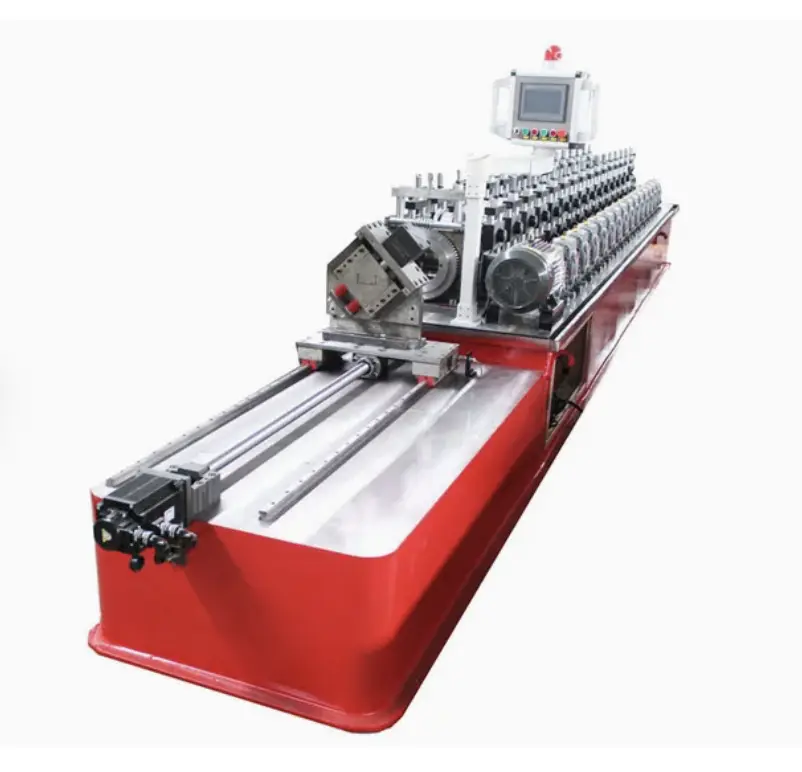
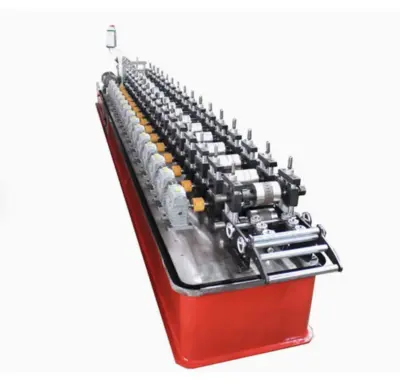

A gypsum channel roll forming machine is designed to create metal channels used in drywall systems, particularly for gypsum board installations. These channels, often known as furring channels or gypsum channels, are used in construction to support plasterboard walls and ceilings. Here's an outline of typical specifications and a general description of a gypsum channel roll forming machine:
Description
A gypsum channel roll forming machine automates the process of shaping metal coils into gypsum channels used in drywall framing systems. The machine feeds galvanized or aluminum coil stock through a series of rollers that progressively bend the metal into the desired profile. Equipped with a PLC control system, the machine allows users to set precise dimensions, quantities, and cut lengths, facilitating high production rates with minimal manual intervention.
This machine is highly efficient, producing uniform channels with excellent structural integrity, and is suitable for a range of construction projects that use gypsum boards for wall and ceiling systems.
Material:Material Type: Galvanized steel, aluminum, or other lightweight metalsThickness: Typically between 0.3 mm to 0.8 mm, depending on structural requirementsWidth: Coil widths are generally within 50 to 100 mm, adaptable to channel dimensions.
Material Type: Galvanized steel, aluminum, or other lightweight metals
Thickness: Typically between 0.3 mm to 0.8 mm, depending on structural requirements
Width: Coil widths are generally within 50 to 100 mm, adaptable to channel dimensions.
Machine Speed:Production speed can range from 10-20 meters per minute, with some models reaching up to 30 meters/min.
Production speed can range from 10-20 meters per minute, with some models reaching up to 30 meters/min.
Rollers and Stands:Roller Material: High-grade steel (often 45# steel or Cr12) with heat treatment for durabilityNumber of Rollers: Generally around 12-15 forming stations, depending on channel complexityShaft Diameter: Typically 50-60 mm for strength and stability during operation
Roller Material: High-grade steel (often 45# steel or Cr12) with heat treatment for durability
Number of Rollers: Generally around 12-15 forming stations, depending on channel complexity
Shaft Diameter: Typically 50-60 mm for strength and stability during operation
Cutting System:Type: Hydraulic or servo-controlled cutting system for high precisionCutting Tolerance: Generally ±1 mmPower: Usually hydraulic with a power range of 4-6 kW for cutting
Type: Hydraulic or servo-controlled cutting system for high precision
Cutting Tolerance: Generally ±1 mm
Power: Usually hydraulic with a power range of 4-6 kW for cutting
Power Requirements:Main Motor Power: Typically 5-7.5 kW, depending on machine sizeHydraulic Power: Generally 3-5 kW
Main Motor Power: Typically 5-7.5 kW, depending on machine size
Hydraulic Power: Generally 3-5 kW
Control System:Type: PLC control with HMI (Human-Machine Interface) touch screen for setting lengths, quantities, and other parametersElectric System: Typically supported by standard voltage options (such as 220V, 380V, or as required by the client’s country)
Type: PLC control with HMI (Human-Machine Interface) touch screen for setting lengths, quantities, and other parameters
Electric System: Typically supported by standard voltage options (such as 220V, 380V, or as required by the client’s country)
Dimensions and Weight:Length: Typically around 5-7 metersWidth: Approximately 1-1.5 metersWeight: Between 3,000-5,000 kg, varying with model and specifications
Length: Typically around 5-7 meters
Width: Approximately 1-1.5 meters
Weight: Between 3,000-5,000 kg, varying with model and specifications
Output Channel Sizes:Standard U or C profile sizes for gypsum channels, typically ranging in width from 25 to 50 mm and in depth from 15 to 40 mm.
Standard U or C profile sizes for gypsum channels, typically ranging in width from 25 to 50 mm and in depth from 15 to 40 mm.
