

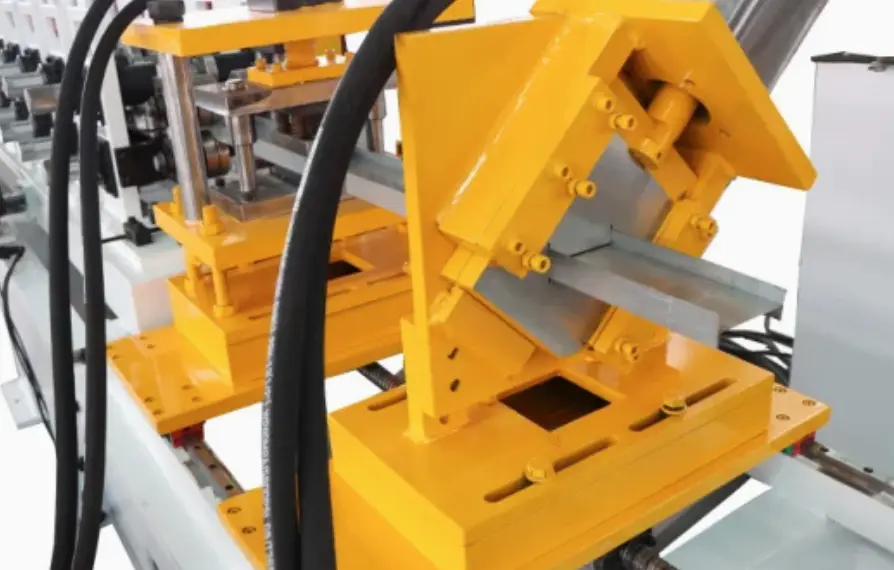
Drywall Roll Forming Machine in Italy
Overview
Example Profiles Produced
C-stud:
Width: 40-100 mm
Flange: 20-50 mm
Lip: 5-15 mm
U-track:
Width: 50-150 mm
Height: 20-50 mm
A drywall roll forming machine is a specialized piece of equipment designed to produce metal framing components used in drywall construction. These machines are typically used to manufacture steel or aluminum studs, tracks, and channels, which are key elements in framing drywall partitions. Here's a basic overview:
Key Features
Material: Usually works with galvanized steel, aluminum, or other metals used in the construction industry.
Automation: Often automated, allowing for continuous operation with minimal manual intervention, which leads to high productivity.
Flexibility: Many machines can be adjusted to produce different sizes and types of studs or tracks, often with the option to switch between profiles like U, C, or L channels.
Precision: Produces components with high accuracy in terms of dimensions and shape, which is essential for drywall installation.
Customization: Machines can be tailored to the specifications required by the customer, allowing for variations in thickness, width, and profile.
Common Products Produced
Studs: Vertical framing members.
Tracks: Horizontal framing members.
Hat channels: For furring out walls or ceilings.
Angles and corner beads: Used to reinforce corners or edges in drywall construction.
Specs
General Specifications for a Drywall Roll Forming Machine
Material Specifications:
Material Type: Galvanized steel, Aluminum, or Stainless steel
Material Thickness: 0.3 mm – 1.2 mm (customizable depending on product)
Material Width: 40 mm – 150 mm (adjustable)
Roll Forming System:
Roll Stations: 10-20 roll stations (varies based on machine model)
Roller Material: High-grade chromium steel or heat-treated alloy steel (for durability)
Shaft Diameter: 50-75 mm (can vary depending on the load capacity)
Forming Speed: 10-20 meters per minute (can be faster depending on configuration)
Product Dimensions:
Stud Profiles: C-shaped studs, U-shaped tracks, Hat channels, L angles, etc.
Width Range: 40-150 mm (adjustable)
Height Range: 20-100 mm (depending on product)
Length: Typically programmable and adjustable (cut-to-length system)
Cutting System:
Cutting Type: Hydraulic cutting or Flying cutting (continuous operation while cutting)
Cutting Accuracy: ±0.5 mm
Control System:
PLC Control: Typically with touchscreen HMI for easy operation.
Automation: Fully automated, with options for batch counting, length adjustment, and remote troubleshooting.
Power & Drive:
Main Motor Power: 5.5 KW to 11 KW (depending on machine size and speed)
Hydraulic Station Power: 3-5.5 KW (depending on cutting system)
Voltage: 380V/50Hz/3Phase or customizable for other standards
Additional Features:
Punching: Optional pre-punching or post-punching system for adding holes to studs and tracks.
Decoiler: Manual or hydraulic decoilers with a load capacity of 2-5 tons.
Stacker: Automatic stacking system for collecting and organizing finished products.
Safety Features: Emergency stop buttons, safety guards around high-speed areas, overload protection.
Dimensions and Weight:
Machine Dimensions: Approximately 6-12 meters in length, 1-2 meters in width (varies with model)
Machine Weight: Typically around 5-10 tons, depending on configuration
Explore More New Equipment Listings on Equipt
Browse related New Roll Formers, Roll Formers & Rolling Mills, Fabricating, and Metalworking equipment, including N/A machines for sale on Equipt.
New Equipment for Sale in Italy
Browse New Roll Formers, Roll Formers & Rolling Mills, Fabricating, and N/A equipment for sale across Italy, including related Metalworking inventory paths.
Sell Your Used Equipment
Find dedicated pages to sell used Roll Formers, Roll Formers & Rolling Mills, Fabricating, Metalworking, and N/A equipment on Equipt.