

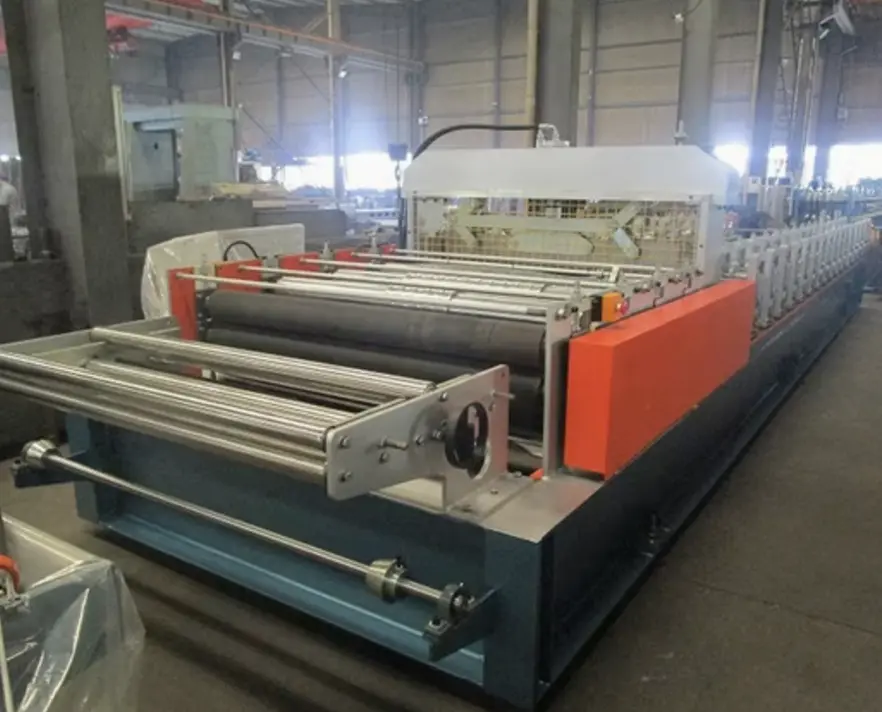
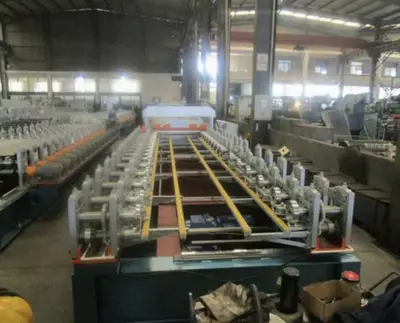

Roof roll forming machines are vital in the construction industry, particularly in the UK, where roofing profiles must meet stringent quality standards for durability and weather resistance. These machines produce metal roofing sheets with precision, speed, and reliability. Here's everything you need to know about roof roll forming machines tailored to the UK market.
Description of Roof Roll Forming Machine
A roof roll forming machine is designed to produce metal roofing sheets in various profiles, such as corrugated, trapezoidal, and standing seam panels. These machines are automated systems capable of high-speed production, making them an essential asset for roofing material manufacturers.
Key Features:
Automated Operation: Includes PLC systems for precision and ease of use.
Profile Versatility: Can produce multiple roofing profiles to meet customer demands.
Durable Components: Built with high-quality rollers and frames to ensure long-lasting performance.
High Production Speed: Capable of producing up to 40 meters per minute, depending on the model.
Customizable Options: Machines can be tailored to specific profile dimensions, materials, and gauges.
Applications
Roof roll forming machines are extensively used in the production of roofing sheets for:
Residential buildings
Commercial structures
Industrial warehouses
Agricultural sheds
Benefits of Roof Roll Forming Machines
Efficiency: High-speed production reduces lead time.
Consistency: Ensures uniformity in sheet profiles.
Cost-Effective: Minimizes material waste.
Flexibility: Allows customization of profiles as per customer needs.
Durability: Designed for long-term, heavy-duty usage.
Common Questions and Answers
Q1: What types of profiles can a roof roll forming machine produce?
A roof roll forming machine can produce profiles such as trapezoidal, corrugated, and standing seam panels. Some models are versatile and can switch between profiles with minor adjustments.
Q2: What materials can be used in roof roll forming machines?
The machines are compatible with materials like galvanized steel, aluminum, and color-coated steel, typically with thicknesses ranging from 0.3 mm to 0.8 mm.
Q3: How much power does the machine require?
Most machines operate on a 380V/50Hz power supply, but customization for UK-specific power requirements is available.
Q4: Can the machine be customized for unique profiles?
Yes, manufacturers offer customization options to produce specific profiles based on customer needs.
Q5: How is the machine maintained?
Regular maintenance includes:
Cleaning and lubrication of rollers.
Checking and tightening of bolts.
Calibration of cutting blades.
Inspection of the PLC system and electrical components.
Q6: What is the average cost of a roof roll forming machine in the UK?
The cost ranges between £30,000 and £80,000, depending on the specifications and customization.
Q7: How long does installation take?
Installation typically takes 3–5 days, including testing and training.
Material Thickness: 0.3–0.8 mm
Material Types: Galvanized steel, aluminum, color-coated steel
Machine Speed: 15–40 meters per minute
Roller Material: High-grade steel (Cr12, with heat treatment)
Cutting System: Hydraulic cutting with blade material Cr12
Frame Structure: Welded steel structure
Power Supply: 380V/50Hz (or customized for UK standards)
PLC System: Mitsubishi, Siemens, or similar
Machine Dimensions: Approx. 8m x 1.5m x 1.5m
Weight: 5–7 tons
Control Panel: Touchscreen interface
Extras: Decoilers, stackers, and coil handling systems
