

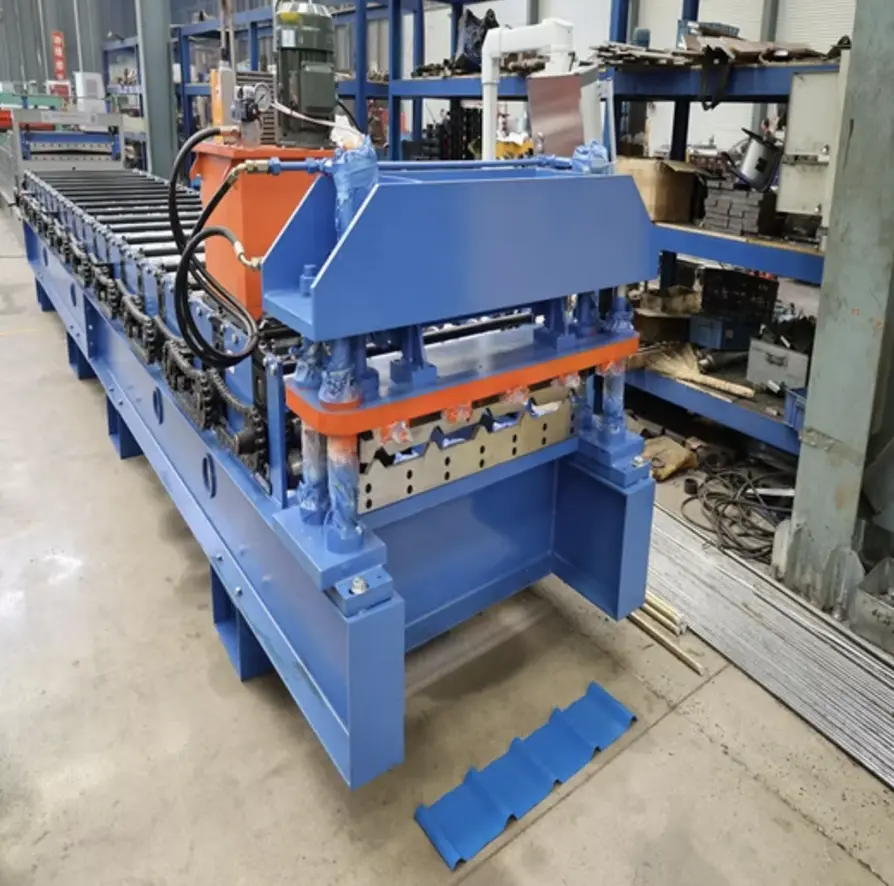
Roofing Roll Forming Machine Netherlands
Overview
Roofing roll forming machines are specialized industrial equipment designed to produce roofing panels efficiently and precisely. These machines take metal coils and transform them into pre-designed roofing profiles through a continuous bending process. Roofing panels made by roll forming machines are widely used in residential, commercial, and industrial buildings due to their durability, lightweight nature, and ease of installation.
Key Features
High production speed and efficiency.
Customizable profiles tailored to market demands.
Durable construction for long-lasting performance.
Automation for consistent quality output.
Applications in the Netherlands
Roofing roll forming machines cater to the diverse needs of the Dutch market, including:
Residential Roofing: Popular profiles like standing seam and corrugated panels are commonly used.
Commercial Roofing: Strong and durable panels for warehouses, factories, and shopping centers.
Agricultural Structures: Metal roofs for barns, silos, and storage facilities.
Question and Answer Section
Q1: What types of roofing profiles can this machine produce?
A1: The machine can produce a variety of profiles such as standing seam panels, corrugated sheets, and trapezoidal roofing sheets. Profiles can be customized to meet specific market needs in the Netherlands.
Q2: How is the machine adapted to Dutch power supply standards?
A2: The machine is designed to operate on 380V, 3-phase, 50Hz power, which is standard in the Netherlands. Custom configurations are available if needed.
Q3: Can the machine work with eco-friendly materials?
A3: Yes, the machine can process eco-friendly roofing materials such as recyclable steel and aluminum, aligning with sustainable building practices in the Netherlands.
Q4: What is the lead time for installation?
A4: Depending on customization and shipping, the lead time for installation typically ranges from 4 to 8 weeks.
Q5: Is training provided for machine operation?
A5: Yes, comprehensive training and user manuals are provided. Remote or onsite training options are also available for Dutch operators.
Q6: How is maintenance handled?
A6: Maintenance involves regular lubrication of rollers, inspection of hydraulic systems, and cleaning of cutting blades. Spare parts and support services are available locally or through remote assistance.
Q7: Can the machine handle custom orders for specific roofing designs?
A7: Absolutely. The PLC system allows for easy programming to produce unique profiles tailored to customer requirements in the Netherlands.
Q8: Are there any tax benefits or subsidies for purchasing this machine in the Netherlands?
A8: Businesses in the Netherlands may benefit from tax deductions or subsidies under environmental or industrial innovation schemes. Consult with local authorities for specific programs.
Conclusion
Roofing roll forming machines are indispensable for producing high-quality roofing panels. With advanced features, adaptability to the Netherlands' market requirements, and robust construction, these machines are an excellent investment for manufacturers looking to enhance productivity and cater to diverse customer demands.
Specs
Specifications of Roofing Roll Forming Machines
Specification
Details
Material Compatibility
Galvanized steel, aluminum, copper, and pre-painted steel.
Material Thickness
0.3mm to 1.2mm
Profile Width
300mm to 1200mm (customizable)
Roller Material
High-grade steel (GCr15 or equivalent), hardened and chromed for durability.
Machine Speed
15m/min to 40m/min, depending on the profile and material.
Cutting System
Hydraulic or servo-controlled cutting system with precise blade design.
Power Requirements
380V, 3-phase, 50Hz (customizable for the Netherlands grid standards).
Control System
PLC-based system with touchscreen interface for ease of operation.
Frame Structure
Welded steel frame for high stability and minimal vibration.
Safety Features
Emergency stop buttons, protective enclosures, and safety guards.
Optional Add-ons
Automatic stackers, remote PLC control, uncoilers, and coil handling systems.
Dimension
Typically 10m x 1.5m x 1.2m (varies based on configuration).
Weight
8 to 12 tons, depending on customization.
Explore More New Equipment Listings on Equipt
Browse related New Roll Formers, Roll Formers & Rolling Mills, Fabricating, and Metalworking equipment, including N/A machines for sale on Equipt.
New Equipment for Sale in Netherlands
Browse New Roll Formers, Roll Formers & Rolling Mills, Fabricating, and N/A equipment for sale across Netherlands, including related Metalworking inventory paths.
Sell Your Used Equipment
Find dedicated pages to sell used Roll Formers, Roll Formers & Rolling Mills, Fabricating, Metalworking, and N/A equipment on Equipt.