

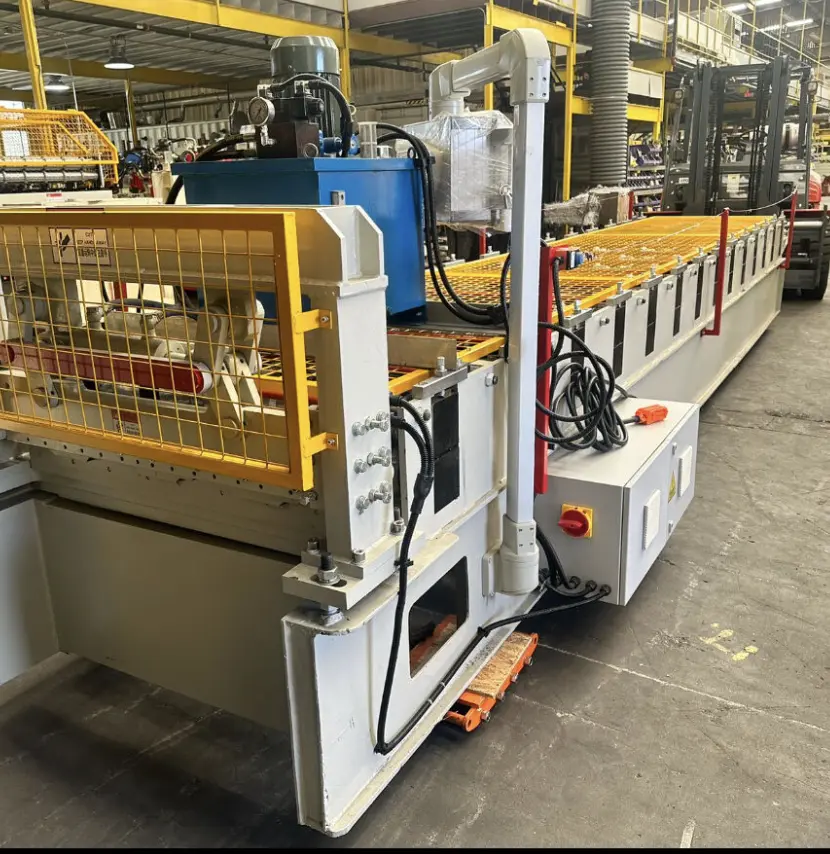
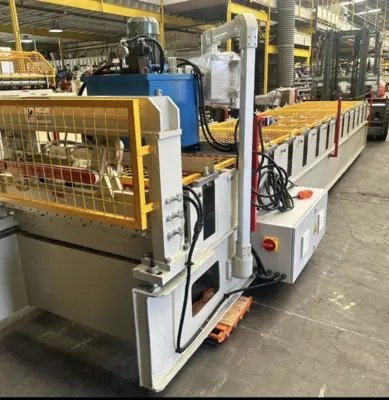
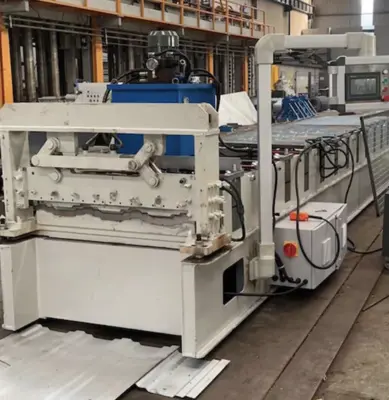

Roofing sheet roll forming machines are pivotal in the construction industry for manufacturing durable, high-quality roofing sheets. These machines are tailored to meet the demands of the Canadian market, ensuring reliability and adherence to local building standards. Whether for residential, commercial, or industrial use, these machines are indispensable for producing roofing sheets that withstand Canada’s diverse climatic conditions.
Machine Description
A roofing sheet roll forming machine is a fully automated system designed to transform flat metal coils into contoured roofing sheets with consistent dimensions. It eliminates the need for manual intervention, enhancing efficiency and precision.
Features:
Automation: Controlled by advanced PLC systems for seamless operations.
Customization: Configurable for various roofing profiles such as corrugated, trapezoidal, or standing seam panels.
Durability: Manufactured with high-grade materials to ensure longevity.
Speed: High production rates to meet large-scale demands.
Energy Efficient: Designed to consume less power, aligning with Canadian energy regulations.
1. Machine Frame and Design
Frame Material: High-strength steel to reduce vibrations.
Frame Size: Typically ranges from 3000mm to 6000mm, depending on the profile requirements.
Roller Material: Hardened chromium steel for durability.
2. Roller System
Number of Rollers: 18–24 (profile-dependent).
Roller Shaft Diameter: 70mm to 100mm.
Roller Surface Treatment: Heat-treated and polished for rust resistance.
3. Motor and Drive
Main Motor Power: 5.5kW to 11kW.
Hydraulic Motor Power: 3kW.
Transmission: Chain drive or gearbox, depending on model.
4. Cutting System
Type: Hydraulic cutting system.
Blade Material: Cr12Mov steel with heat treatment for sharpness and durability.
Cutting Tolerance: ±1mm.
5. Profile Specifications
Material: Galvanized steel, aluminum, or pre-painted steel.
Thickness: 0.3mm to 0.8mm.
Width: Up to 1250mm.
6. Control System
PLC: Siemens or Mitsubishi.
Interface: Touchscreen for user-friendly operation.
Language Support: English, French (optional).
7. Production Speed
Speed: 15–30m/min depending on material and profile.
8. Optional Features
Automatic stacker.
Pre-punching and pre-cutting systems.
Coil car and uncoiler with a capacity of 5–10 tons.
Benefits in the Canadian Market
Weather Resistance: Produces roofing sheets suitable for extreme Canadian weather conditions.
Energy Compliance: Energy-efficient models to align with Canadian energy standards.
Customization: Supports Canadian architectural trends and building codes.
Setup and Installation
Foundation Requirements: Concrete base for stable operations.
Electrical Setup: 380V/50Hz or customized to match local power supply.
Installation Support: Provided by the manufacturer or local distributor.
Maintenance Requirements
Regular lubrication of rollers and chains.
Inspection of hydraulic and electrical systems.
Blade sharpening and replacement as needed.
Periodic calibration for profile accuracy.
Questions and Answers
Q1: What profiles can the machine produce?
A1: The machine can produce corrugated, trapezoidal, and standing seam profiles, depending on the configuration.
Q2: What materials are compatible with the machine?
A2: It is compatible with galvanized steel, pre-painted steel, and aluminum, with thicknesses ranging from 0.3mm to 0.8mm.
Q3: Can the machine be customized for Canadian standards?
A3: Yes, the machine can be customized to meet local building codes and power supply requirements in Canada.
Q4: What is the delivery time for the machine?
A4: Delivery typically takes 45–60 days, depending on the customization level and shipping arrangements.
Q5: Does the machine come with a warranty?
A5: Most manufacturers provide a one-year warranty for the entire machine and five years for critical components like rollers.
Q6: Is training provided for operating the machine?
A6: Yes, most suppliers offer on-site or virtual training to ensure efficient operation.
Q7: How do I maintain consistent production quality?
A7: Regular maintenance, periodic calibration, and using high-quality raw materials ensure consistent production quality.
Q8: What are the power supply requirements?
A8: The standard requirement is 380V/50Hz, but it can be customized to match Canadian power standards.
Conclusion
Investing in a roofing sheet roll forming machine tailored for Canada is a cost-effective way to meet the rising demand for durable roofing materials. By choosing the right machine and ensuring proper maintenance, businesses can achieve consistent, high-quality output while adhering to local building standards.
Specifications
