

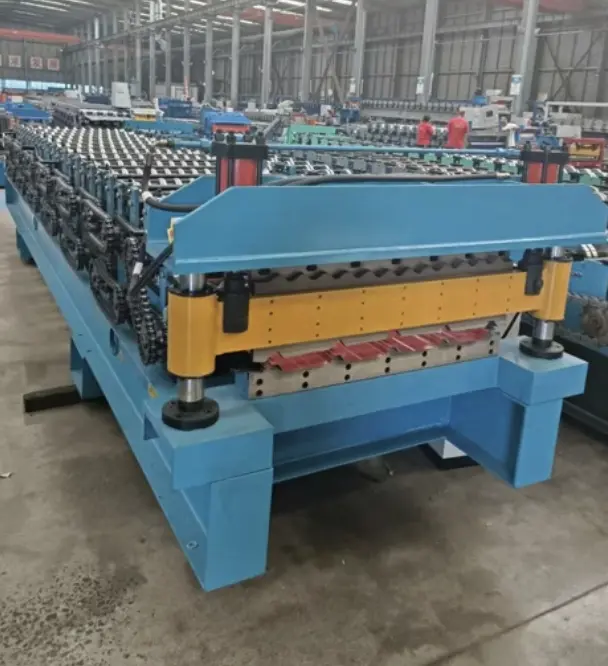
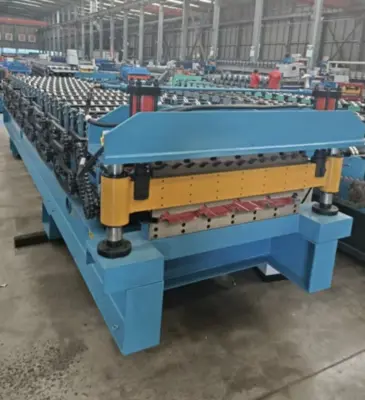
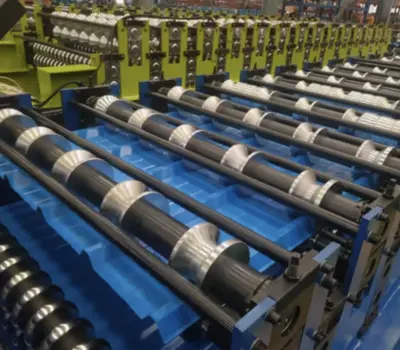
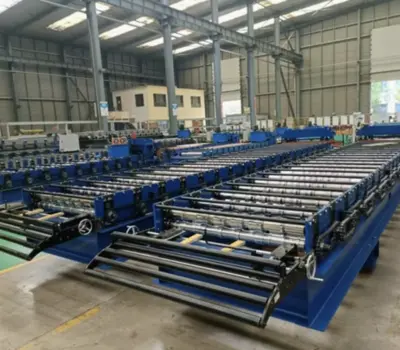

Roofing roll forming machines are advanced equipment designed to produce metal roofing profiles in various designs and sizes. These machines play a crucial role in the construction industry by providing durable and aesthetic roofing solutions efficiently. In the USA, where metal roofing is increasingly popular due to its durability, energy efficiency, and low maintenance, these machines have become a vital part of the industry.
Full Machine Description
Roofing roll forming machines are highly automated systems that transform metal coils into roofing panels or profiles. The machines are equipped with advanced features like programmable controls, hydraulic systems, and safety enclosures, making them user-friendly and efficient.
They cater to different types of roofing profiles, including standing seam, corrugated, ribbed, and PBR panels. Roofing roll forming machines are designed for high production speeds, accuracy, and customization, ensuring they meet the needs of American manufacturers and contractors.
Setup and Installation
Space Requirements: Minimum 30x10 feet for standard machines
Installation Time: 2–3 days, including testing and training
Utilities Needed: 3-phase power supply (customized for USA standards), air compressor for hydraulic systems
Shipping: Machines are delivered fully or semi-assembled depending on the client's location.
Maintenance Requirements
Regular lubrication of rollers and chains
Cleaning of hydraulic systems and replacement of fluids every six months
Inspection of PLC wiring and control systems monthly
Periodic tightening of bolts and structural components
Question and Answer Section
Q1: What profiles can a roofing roll forming machine produce?
A: Roofing roll forming machines can produce various profiles, including standing seam, corrugated, ribbed, PBR, and custom profiles. The choice of profile depends on the dies and roller designs installed in the machine.
Q2: Can the machine handle different material gauges?
A: Yes, roofing roll forming machines can handle materials from 0.3 mm to 0.8 mm thick. Customizations are available for handling thicker or thinner materials.
Q3: Are these machines suitable for small-scale businesses?
A: Yes, roofing roll forming machines are available in different sizes and production capacities, making them suitable for small, medium, and large-scale operations.
Q4: How can I customize the machine for my specific needs?
A: You can customize various aspects such as profile designs, material gauges, motor power, and additional features like stackers or embossing units.
Q5: What is the price range of roofing roll forming machines in the USA?
A: Prices vary depending on machine size, production capacity, and added features. Entry-level machines start around $50,000, while high-end models can exceed $150,000.
Q6: How long does it take to manufacture and deliver the machine?
A: Manufacturing typically takes 30–60 days, depending on customizations. Delivery time varies based on location within the USA but usually ranges from 1 to 2 weeks.
Q7: What certifications do these machines need in the USA?
A: Machines must comply with OSHA standards and may need UL certifications for electrical components.
Q8: Do I need special training to operate the machine?
A: Basic training is provided upon installation, and the machines come with a user manual. The intuitive PLC system makes operation straightforward.
Q9: Can the machine work with pre-painted metal?
A: Yes, the machine is designed to handle pre-painted metals without damaging the finish.
Q10: How can I ensure after-sales support?
A: Choose a manufacturer or supplier that offers local support in the USA, spare parts availability, and a dedicated service team.
By investing in a roofing roll forming machine, businesses in the USA can achieve precision, efficiency, and scalability in their roofing panel production. Whether you’re a contractor or a manufacturer, these machines are a game-changer for the construction industry.
Material Type: Galvanized steel, aluminum, copper, pre-painted steel
Material Thickness: 0.3 mm to 0.8 mm (gauge options available)
Profile Width: Customizable, typically ranging from 12 to 48 inches
Roller Materials: High-grade GCr15 steel with heat treatment and hard chrome plating
Frame Size: 300–450 mm H-beam or steel plate welded frame
Forming Stations: 10–20 stations (varies with profile complexity)
Motor Power: 5.5–15 kW (adjustable based on production needs)
Hydraulic System Power: 4 kW or higher
Control System: PLC system with touch screen for easy operation
Machine Speed: Up to 30 meters per minute
Cutting System: Hydraulic or servo-motor-driven cutting with precise blade design
Safety Features: Safety guards, emergency stop buttons, and compliance with OSHA standards
Optional Add-ons:Uncoilers and recoilersStacking systemsEmbossing systemsAutomatic coil feeding systems
Uncoilers and recoilers
Stacking systems
Embossing systems
Automatic coil feeding systems
