

AI search could not be completed. Please try again or adjust your search.
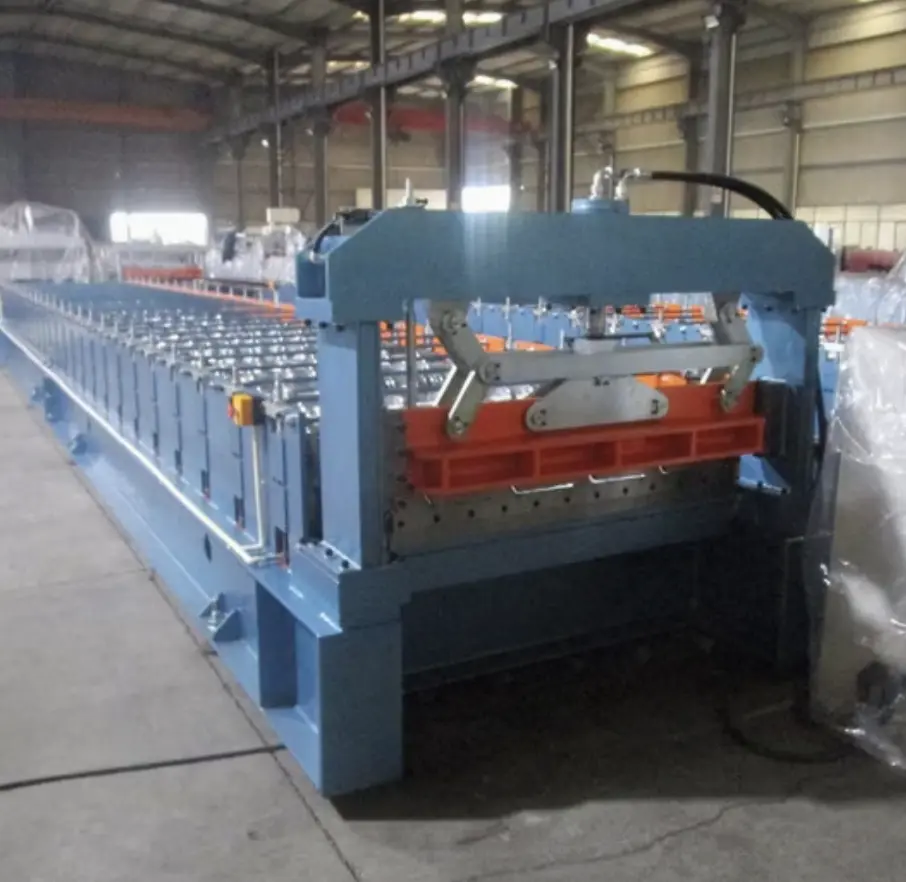
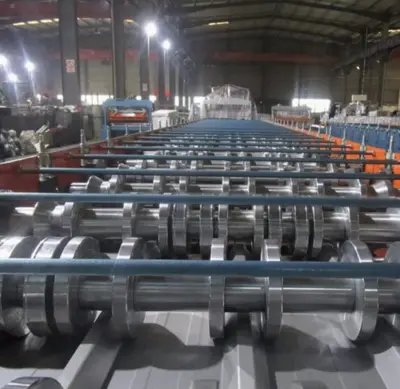

A roof panel roll forming machine is an industrial-grade equipment designed to manufacture roofing panels efficiently and accurately. These machines convert coiled sheet metal into high-quality roof panels with consistent dimensions and profiles. Roof panels produced by roll forming machines are widely used in residential, commercial, and industrial construction for their durability, weather resistance, and aesthetic appeal.
Roof panel roll forming machines are highly customizable, capable of producing various profiles such as trapezoidal, corrugated, or standing seam, depending on the requirements. They are equipped with advanced technology for precision, speed, and user-friendly operation.
Frequently Asked Questions
Q1. What types of roof panels can this machine produce?
A: This machine can produce various profiles, including trapezoidal, corrugated, and standing seam panels. Custom dies and rollers can be designed to meet specific profile requirements.
Q2. Can the machine handle different material thicknesses?
A: Yes, the machine is designed to handle a range of material thicknesses, typically between 0.3mm and 0.8mm. It can be customized for thicker or thinner materials upon request.
Q3. How much space is required to install the machine?
A: The machine's footprint varies, but a standard roof panel roll forming machine requires approximately 15m x 2m x 1.5m (length x width x height). Additional space is needed for material handling and operator movement.
Q4. What is the average lead time for manufacturing the machine?
A: The lead time varies depending on the complexity and customization but typically ranges from 30 to 60 days.
Q5. How can I ensure consistent production quality?
A: Regular maintenance, proper calibration, and using high-quality raw materials are essential for consistent production quality. Many machines also come with automated quality checks.
Q6. Is training required to operate the machine?
A: While the machine is user-friendly, basic training is recommended for operators to understand its functionality, troubleshooting, and maintenance.
Q7. What is included in the machine warranty?
A: Most manufacturers offer a one-year warranty covering parts and service, excluding consumables. Extended warranties can be negotiated.
Q8. Can the machine be integrated into an automated production line?
A: Yes, roof panel roll forming machines can be integrated with automated systems, including stacking, packaging, and material handling equipment.
Q9. What maintenance is required for the machine?
A: Regular lubrication of moving parts, cleaning of rollers, and periodic inspections of the hydraulic and electrical systems are recommended for optimal performance.
Q10. Are replacement parts readily available?
A: Manufacturers usually provide a list of spare parts and can supply replacements quickly. It's advisable to keep essential parts, like blades and rollers, in stock.
Roller Materials
Material: High-grade steel (45# or GCr15)Hardness: Hardened with HRC 58-62 for durabilitySurface Finish: Polished and chrome-coated to prevent corrosion and ensure smooth operation.
Material: High-grade steel (45# or GCr15)
Hardness: Hardened with HRC 58-62 for durability
Surface Finish: Polished and chrome-coated to prevent corrosion and ensure smooth operation.
Punching and Notching System
Hydraulic punching for accurate hole placement (if required for profile design).Precision notching system for seamless panel ends.
Hydraulic punching for accurate hole placement (if required for profile design).
Precision notching system for seamless panel ends.
Frame Structure
Material: Welded steel frame with heavy-duty construction.Frame Size: Ranges from 300mm to 450mm depending on the machine's capacity.
Material: Welded steel frame with heavy-duty construction.
Frame Size: Ranges from 300mm to 450mm depending on the machine's capacity.
Motors
Drive Motor: Typically 5-15 HP, depending on the panel thickness and width.Hydraulic Motor: Ensures smooth cutting and punching.
Drive Motor: Typically 5-15 HP, depending on the panel thickness and width.
Hydraulic Motor: Ensures smooth cutting and punching.
PLC Control System
Programmable Logic Controller (PLC) for easy operation.Equipped with a touchscreen interface for setting parameters like length, quantity, and speed.
Programmable Logic Controller (PLC) for easy operation.
Equipped with a touchscreen interface for setting parameters like length, quantity, and speed.
Cutting Mechanism
Hydraulic cutting system with high-precision blades.Cutting Type: Cold cutting without deformation of the material.
Hydraulic cutting system with high-precision blades.
Cutting Type: Cold cutting without deformation of the material.
Machine Speed
Production Speed: Typically 15-30 meters per minute (customizable).High-speed machines can achieve up to 60 meters per minute.
Production Speed: Typically 15-30 meters per minute (customizable).
High-speed machines can achieve up to 60 meters per minute.
Safety Features
Safety guards and enclosures around rollers and cutting systems.Emergency stop buttons for operational safety.
Safety guards and enclosures around rollers and cutting systems.
Emergency stop buttons for operational safety.
Power Supply
Voltage: Adaptable to local requirements (e.g., 380V, 50Hz, or 220V, 60Hz).Phase: Three-phase or single-phase options available.
Voltage: Adaptable to local requirements (e.g., 380V, 50Hz, or 220V, 60Hz).
Phase: Three-phase or single-phase options available.
Material Compatibility
Compatible Materials: Galvanized steel, pre-painted steel, aluminum, and other metals.Thickness Range: 0.3mm to 0.8mm.Width Range: 1000mm to 1250mm (depending on the profile).
Compatible Materials: Galvanized steel, pre-painted steel, aluminum, and other metals.
Thickness Range: 0.3mm to 0.8mm.
Width Range: 1000mm to 1250mm (depending on the profile).
Extras
Automatic stackers for panel collection.Decoilers and recoilers for seamless material feeding and rewinding.Remote PLC control systems for operation monitoring and adjustments.
Automatic stackers for panel collection.
Decoilers and recoilers for seamless material feeding and rewinding.
Remote PLC control systems for operation monitoring and adjustments.
