


Double Layer Roll Forming Machine: Overview, Specifications, and FAQ
Introduction
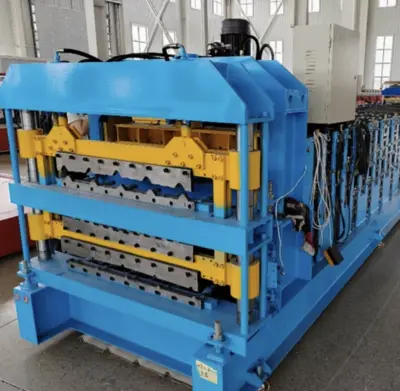
Double Layer Roll Forming Machines are highly versatile equipment in metal sheet manufacturing, providing dual-layered production capabilities within a single machine frame. These machines can produce two different profiles without the need for multiple, separate roll forming machines, making them highly efficient and cost-effective solutions for industries producing various metal profiles.
Machine Description
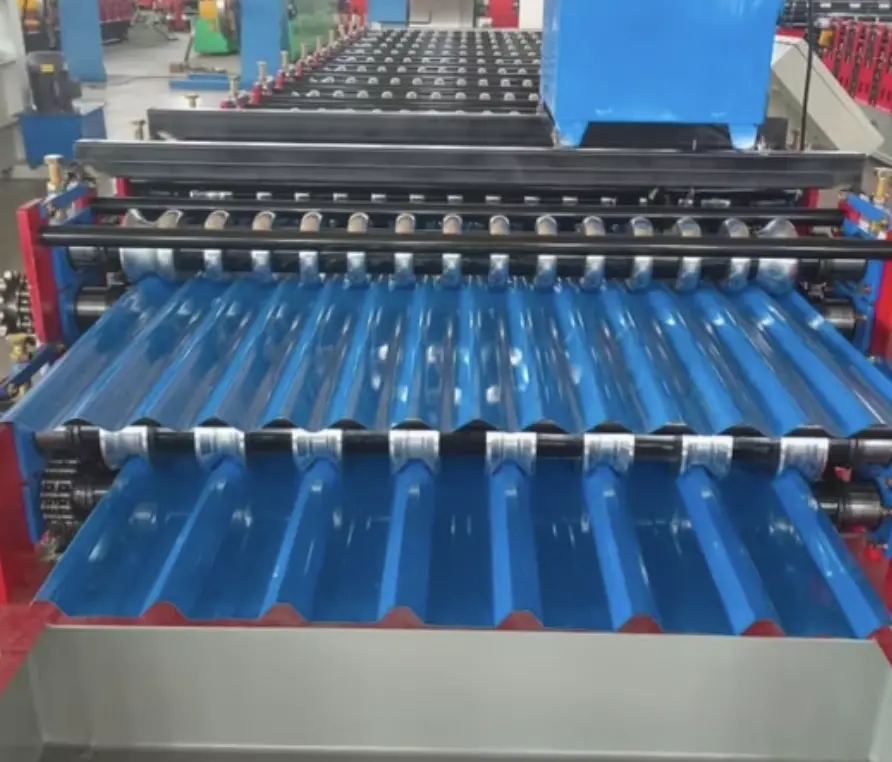
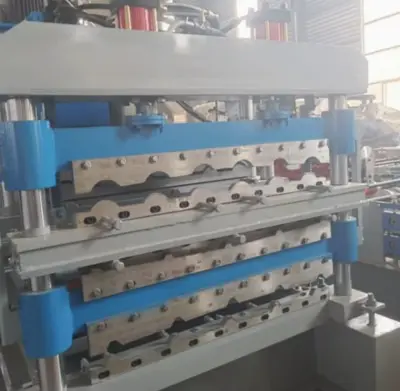
A Double Layer Roll Forming Machine is designed to produce two metal sheet profiles from a single machine body, allowing manufacturers to switch between profiles quickly without reconfiguring or stopping production. It is equipped with a top and bottom roll forming deck, each set to create a specific metal profile (like roofing sheets or wall panels) according to the design requirements. The switching mechanism enables operators to select between the two layers, increasing productivity while reducing footprint and cost.
These machines are particularly suitable for producing roofing panels, wall cladding, and other metal sheets commonly used in the construction industry. They are ideal for companies that need a variety of profiles in small to medium batches.
Machine Working Process
Material Loading
The metal coil is placed on an uncoiler, which feeds the metal sheet into the machine.
Roll Forming
Depending on the selected profile, the metal sheet is fed into the upper or lower roll forming section.
Rollers shape the sheet into the desired profile.
Cutting and Discharge
The hydraulic cutter slices the metal to the pre-set length, and the finished sheet is then discharged from the machine.
Profile Applications
Double Layer Roll Forming Machines are widely used in the following applications:
Roofing sheets for residential, commercial, and industrial buildings.
Wall cladding profiles for construction and renovation projects.
Custom profiles for specialty construction requirements.
Advantages of Double Layer Roll Forming Machines
Space-Saving Design
Allows two profiles within a single frame, reducing factory space requirements.
Cost Efficiency
Produces two profiles at once, eliminating the need for separate machines.
High Flexibility
Rapid profile switching, reducing downtime and increasing production flexibility.
Reduced Production Time
High-speed production with minimal manual intervention due to PLC automation.
Q&A Section
Q1: How does the double-layer system benefit production?
A: The double-layer system allows manufacturers to produce two different profiles from one machine, saving space and reducing equipment costs. It also speeds up production by allowing quick profile changes without needing a second machine.
Q2: Can I customize the profiles for the top and bottom layers?
A: Yes, double layer roll forming machines are highly customizable. You can set the top and bottom decks for different profiles as per your production requirements. However, the profiles must be specified during the machine design phase to ensure the rollers and other specifications are compatible.
Q3: What materials can this machine work with?
A: Double Layer Roll Forming Machines are compatible with various metals, including galvanized steel, aluminum, and colored steel, with thicknesses ranging from 0.3 mm to 0.8 mm, depending on the model and machine setup.
Q4: What safety features are included in this machine?
A: These machines are designed with robust safety measures, including emergency stop buttons, safety light curtains, and guards around the critical operating areas to protect operators.
Q5: How easy is it to operate and maintain a Double Layer Roll Forming Machine?
A: Operating the machine is simplified with a PLC control system and a user-friendly HMI. Maintenance involves regular checks of the rollers, hydraulic system, and electrical components. Routine lubrication and inspection of parts will ensure long-term performance and reliability.
Q6: Are there optional features available for this machine?
A: Yes, optional features like a remote PLC system, automated stackers, and coil handling systems can be added to streamline and automate the production line further.
Q7: What industries benefit most from Double Layer Roll Forming Machines?
A: Construction companies, metal sheet manufacturers, and industries requiring various profiles benefit significantly. It’s especially advantageous for manufacturers needing versatility and efficiency in roofing and wall cladding production.
Roller Materials
High-grade steel with chrome plating to ensure long-lasting durability and precision.Hardened rollers to withstand high production cycles and maintain profile quality.
High-grade steel with chrome plating to ensure long-lasting durability and precision.
Hardened rollers to withstand high production cycles and maintain profile quality.
Frame Size
Heavy-duty steel frame with thickness options tailored to production needs (often 14-16 mm).Reinforced frame design for stability during high-speed operations.
Heavy-duty steel frame with thickness options tailored to production needs (often 14-16 mm).
Reinforced frame design for stability during high-speed operations.
Profile Width
Adjustable, depending on the required metal sheet width, typically ranging from 1000-1200 mm.
Adjustable, depending on the required metal sheet width, typically ranging from 1000-1200 mm.
Material Thickness
Standard thickness ranges from 0.3 to 0.8 mm (depending on the type of metal and customer requirements).
Standard thickness ranges from 0.3 to 0.8 mm (depending on the type of metal and customer requirements).
Power Supply
Voltage and frequency can be customized (e.g., 380V, 50Hz, or 60Hz depending on country specifications).
Voltage and frequency can be customized (e.g., 380V, 50Hz, or 60Hz depending on country specifications).
Main Motor Power
Typically between 7.5 kW to 15 kW depending on production speed and profile type.
Typically between 7.5 kW to 15 kW depending on production speed and profile type.
Hydraulic Cutting System
Hydraulic power unit for precision cutting, reducing waste and enhancing accuracy.Hydraulic cutting power ranges from 5 kW to 7.5 kW.
Hydraulic power unit for precision cutting, reducing waste and enhancing accuracy.
Hydraulic cutting power ranges from 5 kW to 7.5 kW.
PLC Control System
Advanced PLC (Programmable Logic Controller) system for automation and precision control.User-friendly HMI (Human Machine Interface) touchscreen for easy operation and quick profile switching.
Advanced PLC (Programmable Logic Controller) system for automation and precision control.
User-friendly HMI (Human Machine Interface) touchscreen for easy operation and quick profile switching.
Production Speed
Can range from 15 to 20 m/min for each profile, depending on the profile complexity.
Can range from 15 to 20 m/min for each profile, depending on the profile complexity.
Safety Features
Safety guards and enclosures around key components.Emergency stop button and safety light curtains to prevent accidents.
Safety guards and enclosures around key components.
Emergency stop button and safety light curtains to prevent accidents.
Machine Size and Weight
Machine dimensions can vary, typically around 10-12 meters in length and weighing 8-12 tons.
Machine dimensions can vary, typically around 10-12 meters in length and weighing 8-12 tons.
Optional Features
Remote PLC system for operation and troubleshooting from different locations.Stacking systems and coil handling equipment for fully automated operation.
Remote PLC system for operation and troubleshooting from different locations.
Stacking systems and coil handling equipment for fully automated operation.
