

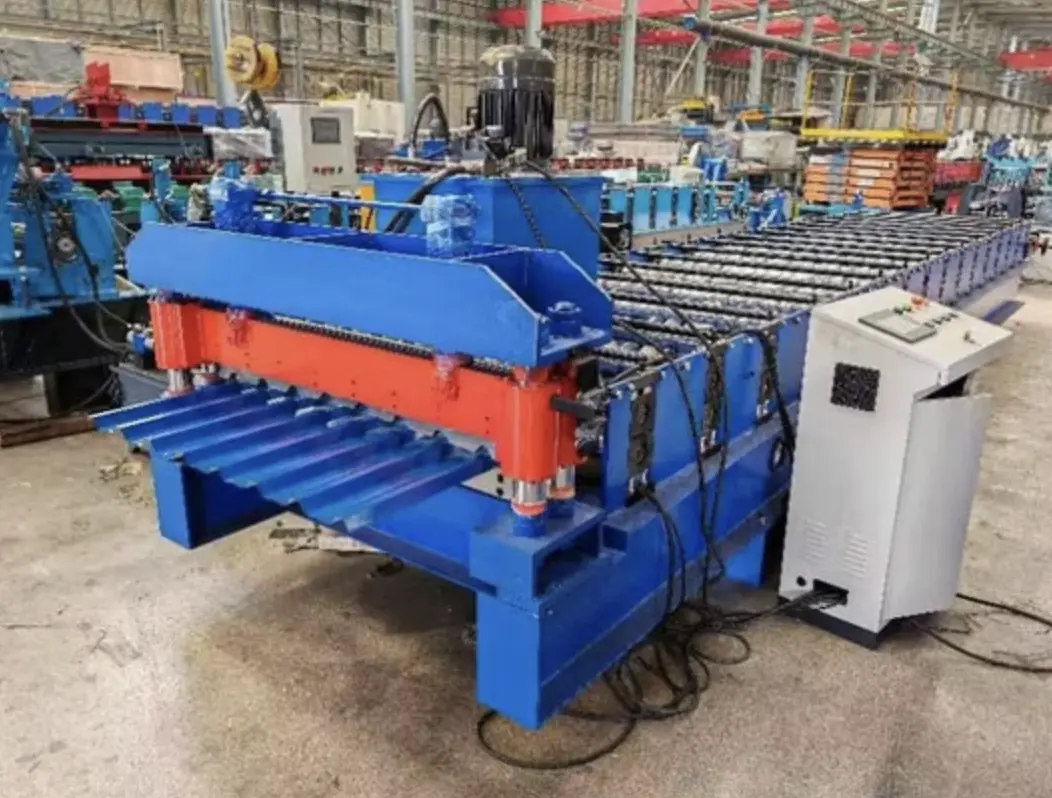
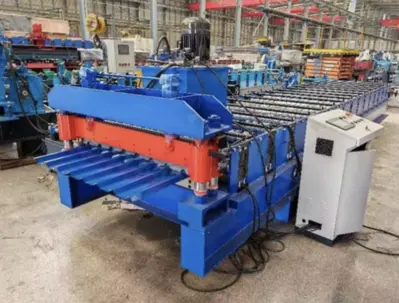
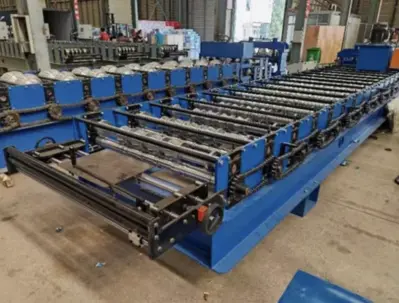

A roofing sheet roll forming machine is a specialized piece of equipment designed to manufacture metal roofing sheets. These machines create precise, consistent, and high-quality roofing panels by forming metal coils into specific profiles through a series of rollers. The machine is commonly used in the construction industry to produce roofing materials for residential, commercial, and industrial buildings. With advanced features for high-speed production and customization options, these machines are valuable for producing various roofing profiles like corrugated, trapezoidal, and ribbed sheets.
Machine Description
Roofing sheet roll forming machines typically consist of several sections:
Decoiler Section: Holds and unwinds the metal coil to feed it into the machine.
Feeding and Leveling System: Ensures the material enters the machine smoothly and is leveled.
Roll Forming System: The core part where rollers progressively bend and shape the sheet metal into the desired profile.
Cutting System: Cuts the formed roofing sheet to the required length, typically using hydraulic or servo-controlled cutters.
Control System: Often includes a PLC (Programmable Logic Controller) that enables automatic and precise control over the machine's functions, including speed, length, and profile customization.
Runout Table: Collects the finished sheets for easy stacking and packaging.
This machine is known for its durability, efficiency, and ability to work with different metals, including steel, aluminum, and galvanized coils. Roofing sheet roll forming machines are often customizable, allowing users to create sheets of varying thicknesses, widths, and profiles.
Key Specifications
Feature
Specification Description
Roller Materials
High-grade steel, often coated for durability
Frame Structure
Heavy-duty steel, designed for stability and precision
Motor Power
Varies by model, typically ranges from 5 HP to 20 HP
Machine Speed
10-15 meters per minute for standard machines, higher for advanced models
Control System
PLC (Programmable Logic Controller) for precise operation and automation
Cutting System
Hydraulic or servo-controlled cutter for accurate cuts
Sheet Width Capacity
Commonly supports up to 1250 mm (varies by model)
Profile Variability
Customizable for various profiles (corrugated, trapezoidal, ribbed)
Material Thickness
0.3 mm to 1.5 mm (varies depending on the machine’s design)
Safety Features
Emergency stop, safety guards, and enclosures
Optional Add-ons
Coil car, stacker, remote PLC system, uncoiler/recoiler
Profile Description
Roofing sheet roll forming machines can produce a range of profiles, depending on the dies and rollers used. Common roofing profiles include:
Corrugated: Known for its wave-like pattern, commonly used in industrial and agricultural buildings.
Trapezoidal: A profile with sharp edges and trapezoidal shapes, suitable for residential and commercial roofing.
Ribbed: Features raised ribs and is ideal for areas requiring high durability and strength.
The materials used can vary widely, including galvanized steel, aluminum, and other coated metals, depending on climate requirements and application needs.
Optional Extras
Automatic Stacker: For easier handling and stacking of finished roofing sheets.
Remote PLC System: Allows remote monitoring and control.
Uncoiler and Recoiler: Ensures smooth feeding and collection of material.
Leveling System: Maintains the flatness of metal sheets before they enter the rollers.
Coil Handling Systems: Includes tippers and lifters to streamline material loading.
Setup and Installation
Setting up a roofing sheet roll forming machine typically involves:
Positioning the machine on a flat, stable surface.
Securing the power connections according to the machine’s requirements.
Configuring the control system for the desired profile and sheet dimensions.
Running test sheets to ensure accurate forming and cutting.
Training operators on safety protocols and control panel functions.
Maintenance Requirements
Regular maintenance helps extend the machine's lifespan and maintain production quality:
Lubricate Rollers: Prevent wear on rollers by applying appropriate lubricants.
Check Alignment: Ensure rollers and cutters are properly aligned to prevent defects.
Inspect Electrical Systems: Regularly check for any wiring or connection issues.
Clean the Machine: Remove any debris or metal shavings after each production run.
Hydraulic Fluid: Regularly check and replace the hydraulic fluid for the cutting system.
Question and Answer Section
Q: What type of materials can be used in a roofing sheet roll forming machine?
A: Roofing sheet roll forming machines can process various metals, including galvanized steel, aluminum, and coated metals. Material choice depends on factors like corrosion resistance, climate suitability, and budget.
Q: How fast can a roofing sheet roll forming machine operate?
A: Machine speed varies by model, with standard machines averaging 10-15 meters per minute. High-speed models can reach up to 20 meters per minute, which increases production capacity.
Q: What is the thickness range supported by these machines?
A: Most machines support metal thicknesses between 0.3 mm and 1.5 mm, although some models can handle thicker materials if required.
Q: Can the machine produce multiple roofing profiles?
A: Yes, many roofing sheet roll forming machines are customizable and can switch between profiles like corrugated, trapezoidal, and ribbed. This typically requires changing dies and configuring the control system accordingly.
Q: How much space is needed to set up a roofing sheet roll forming machine?
A: The space needed depends on the machine size, which varies by model. Generally, you’ll need a dedicated area with enough space for material loading, sheet collection, and safe operator access.
Q: What are the key safety features to consider?
A: Key safety features include emergency stops, safety guards, and protective enclosures. Some machines may also include alarms and warning lights to alert operators to malfunctions or errors.
Q: How often does the machine require maintenance?
A: Basic maintenance, like cleaning and checking fluid levels, should be done daily. More extensive maintenance, such as inspecting electrical and hydraulic systems, is generally recommended monthly or as specified by the manufacturer.
Q: What factors affect the price of a roofing sheet roll forming machine?
A: The machine’s speed, profile capabilities, optional add-ons, motor power, and brand can influence pricing. Generally, machines with high-speed capabilities, advanced control systems, and additional features will be priced higher.
