

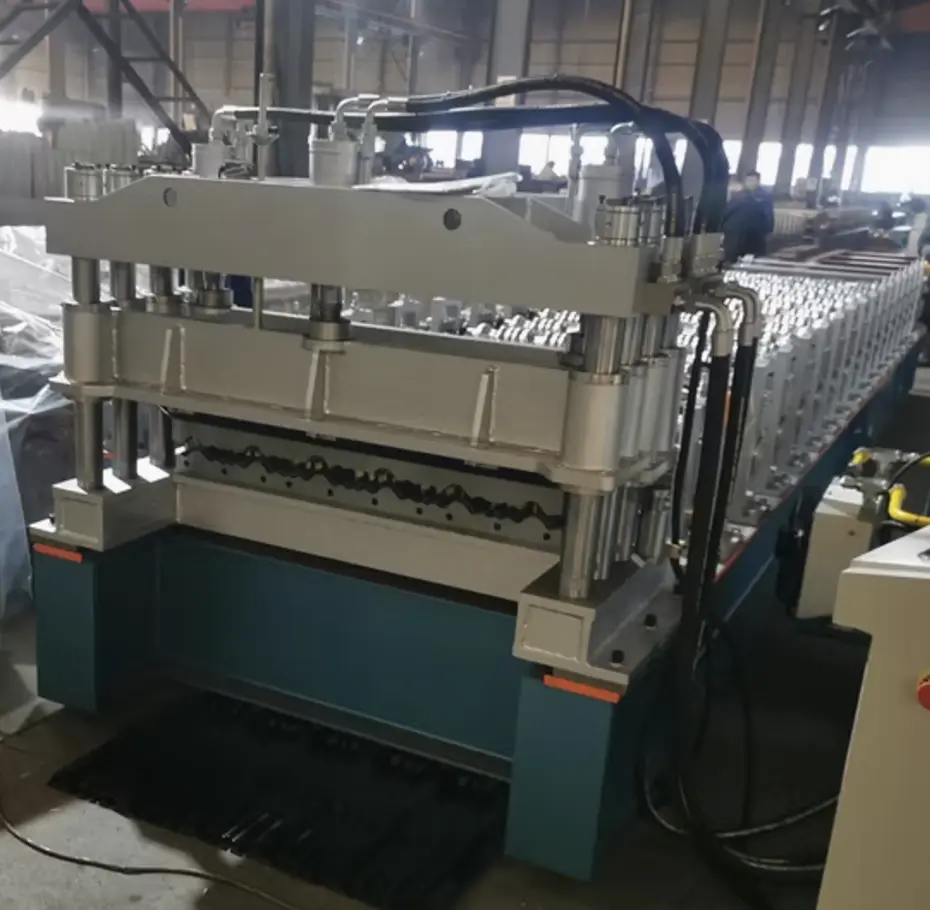
Galvalume Metal Roofing Roll Forming Machine USA
Overview
A Roof Panel Roll Forming Machine is a specialized piece of industrial equipment used to produce metal roof panels for residential, commercial, and industrial construction. It operates by feeding a metal coil through a series of rollers that gradually shape the metal into the desired roof panel profile. These machines are known for their efficiency, accuracy, and ability to produce high-quality, durable roofing materials.
Roof panel roll forming machines are widely used in Libya's construction sector due to the country's demand for robust and weather-resistant roofing solutions. These machines help local manufacturers cater to the growing need for roofing systems in a cost-effective and efficient manner.
Key Features
High Precision: Achieves precise dimensions for roof panels, ensuring perfect installation.
Customizable Profiles: Adaptable to different roofing panel designs for various projects.
Ease of Use: Simple operation with minimal training required.
Energy Efficiency: Low power consumption while maintaining high production rates.
Durability: Built to withstand continuous operation and harsh working conditions.
Questions and Answers
Q1: What types of roof panel profiles can this machine produce?
A1: The machine can produce trapezoidal, corrugated, and standing seam roof panel profiles. Custom profiles can be designed based on project requirements.
Q2: What is the average production speed of the machine?
A2: The machine can produce panels at a speed of 10–30 meters per minute, depending on the complexity of the profile and material thickness.
Q3: Is the machine compatible with Libya’s power supply standards?
A3: Yes, the machine can be configured for Libya’s standard power supply of 380V, 50Hz.
Q4: How much maintenance does the machine require?
A4: Routine maintenance involves lubrication of moving parts, cleaning of rollers, and regular checks on the hydraulic system. Maintenance frequency depends on the intensity of usage.
Q5: What is the cost of a roof panel roll forming machine?
A5: The cost varies based on machine specifications and add-ons. In Libya, a standard machine might range between $30,000 and $80,000.
Q6: Can the machine handle different materials?
A6: Yes, it can process galvanized steel, aluminum, and pre-painted steel, with thicknesses ranging from 0.3mm to 0.8mm.
Q7: How is the machine shipped and installed in Libya?
A7: Machines are shipped in containers with detailed installation manuals. Many manufacturers provide on-site installation and training for operators.
Q8: Are spare parts readily available?
A8: Spare parts are typically available from the manufacturer or authorized dealers. It is recommended to stock essential parts for uninterrupted operation.
Specs
Roller Materials: High-grade steel with hard chrome coating for durability and rust resistance.
Frame Size: Heavy-duty steel frame for stability during high-speed operations.
Cutting System: Hydraulic cutting mechanism with precise tolerances for clean and accurate cuts.
Drive Motor:Main motor: 5.5 kW to 15 kW, depending on the production speed and capacity.Servo motor for advanced control of the feeding system.
Main motor: 5.5 kW to 15 kW, depending on the production speed and capacity.
Servo motor for advanced control of the feeding system.
PLC System:Brand: Siemens or Mitsubishi.User-friendly interface for programming panel length, quantity, and profile type.
Brand: Siemens or Mitsubishi.
User-friendly interface for programming panel length, quantity, and profile type.
Machine Speed: 10–30 meters per minute, depending on panel design and material thickness.
Safety Features: Includes safety guards and emergency stop functions for operator protection.
Power Supply: 380V, 50Hz (adjustable for Libya’s power standards).
Panel Profiles:TrapezoidalCorrugatedStanding seam
Trapezoidal
Corrugated
Standing seam
Material Compatibility:Galvanized steelAluminumPre-painted steelMaterial thickness: 0.3mm to 0.8mm.
Galvanized steel
Aluminum
Pre-painted steel
Material thickness: 0.3mm to 0.8mm.
Optional Add-ons:Uncoilers and recoilersAutomatic stackersLeveling systemsRemote PLC control systems
Uncoilers and recoilers
Automatic stackers
Leveling systems
Remote PLC control systems
Dimensions: Approximately 8m x 1.5m x 1.2m (varies by model).
Weight: 5,000 kg to 10,000 kg.
Explore More New Equipment Listings on Equipt
Browse related New Roll Formers, Roll Formers & Rolling Mills, Fabricating, and Metalworking equipment, including SIEMENS machines for sale on Equipt.
Sell Your Used Equipment
Find dedicated pages to sell used Roll Formers, Roll Formers & Rolling Mills, Fabricating, Metalworking, and SIEMENS equipment on Equipt.