

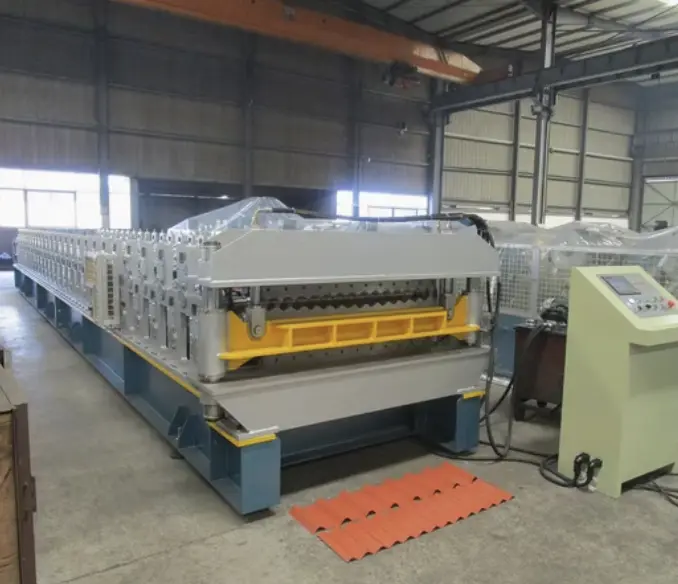

Sheet metal roll forming machines are highly efficient, precision-engineered equipment designed to shape metal sheets into specific profiles and dimensions. These machines are widely used in industries such as construction, automotive, manufacturing, and energy. Denmark, known for its thriving industrial and construction sectors, has a growing demand for sheet metal roll forming machines to meet the needs of local and international markets.
Machine Description
A sheet metal roll forming machine is designed to continuously bend metal sheets into desired profiles, such as panels, roofing sheets, cladding, gutters, and industrial profiles. The machine consists of a series of rollers that gradually shape the metal as it passes through. This process ensures high precision, minimal waste, and excellent repeatability, making it ideal for mass production.
Key Features of Sheet Metal Roll Forming Machines
Continuous Processing: The machine can process metal sheets at high speeds, ensuring efficient production.
High Precision: Advanced control systems maintain consistency in profiles.
Customizable Designs: Can produce a wide range of profiles tailored to industry-specific needs.
Durability: Built with robust materials for long operational life.
Energy Efficient: Modern systems minimize energy consumption.
Applications in Denmark
Construction Industry:
Roofing sheets
Wall claddings
Steel framing
Automotive Sector:
Panels and components for vehicles
Renewable Energy:
Profiles for solar mounting systems and wind turbines
Industrial Projects:
Storage systems
Shelving and racking
Infrastructure:
Profiles for highways and bridges
Setup and Installation Process
Site Preparation: Ensure proper space, ventilation, and electrical setup.
Machine Assembly: The machine components are assembled on-site by technicians.
Calibration: Set up rollers and the cutting system to match the required profile specifications.
Testing: Run trial productions to ensure accuracy and consistency.
Training: Provide operator training for safe and efficient use.
Maintenance Requirements
Routine Inspections: Check rollers, cutting blades, and motors regularly.
Lubrication: Ensure smooth operation by lubricating the machine's moving parts.
Calibration: Periodically recalibrate the rollers for profile accuracy.
Software Updates: Update the PLC system for enhanced functionality.
Common Questions and Answers
Q1: What type of profiles can this machine produce?
A1: Sheet metal roll forming machines can produce roofing panels, wall claddings, gutters, industrial panels, and customized profiles based on specific requirements.
Q2: Can the machine work with multiple metal types?
A2: Yes, it can process various metals, including galvanized steel, stainless steel, and aluminum.
Q3: Is it possible to customize the machine for Denmark's electrical supply?
A3: Absolutely. The machine can be configured to work with Denmark’s standard 380V/50Hz power supply.
Q4: How does the machine ensure accuracy in profiles?
A4: The advanced PLC system and precision-engineered rollers ensure consistent, high-quality profiles with minimal errors.
Q5: What is the average lead time for delivery to Denmark?
A5: The lead time is typically 4-8 weeks, depending on machine specifications and customizations.
Q6: Are there local service options for maintenance?
A6: Many suppliers provide local service technicians or offer remote support for maintenance and troubleshooting.
Q7: What is the price range for these machines?
A7: Prices range from €50,000 to €200,000, depending on the machine's complexity, features, and optional extras.
Material Types: Steel, aluminum, galvanized sheets, stainless steel
Material Thickness: 0.3 mm - 2.0 mm
Material Width: 300 mm - 1250 mm
Forming Speed: 10 - 25 meters per minute (customizable up to 40 m/min)
Roller Material: High-grade steel (e.g., GCr15) with chrome coating
Number of Stations: 8 - 24 stations, depending on profile complexity
Cutting System: Hydraulic or servo motor-driven cutting system
Power Supply: 380V/50Hz (can be customized for Denmark's grid)
Control System: PLC system with touchscreen interface
Machine Dimensions: Varies; typically 8-15 meters in length
Weight: 5 - 12 tons
Optional Features: Decoilers, stackers, embossing, punching systems
