

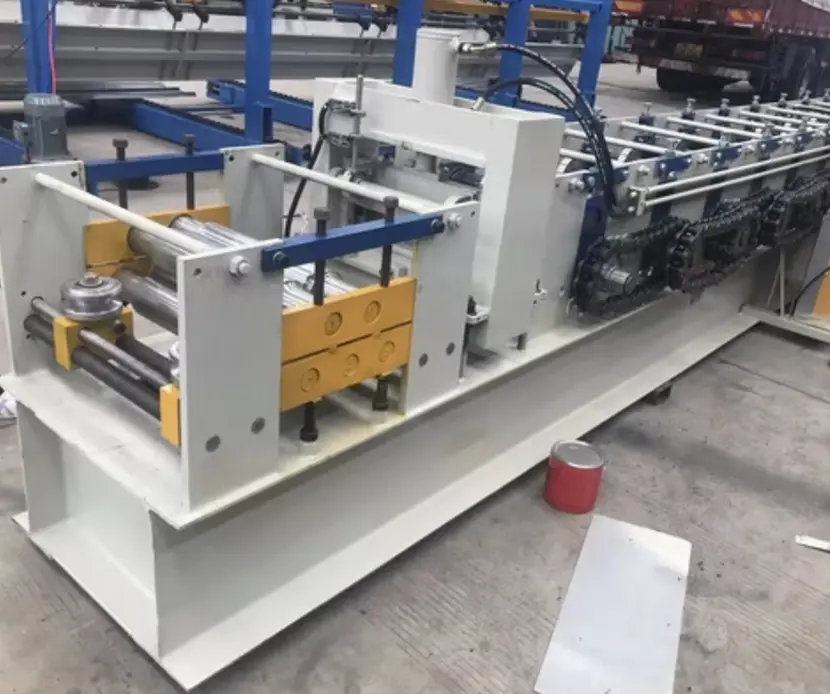
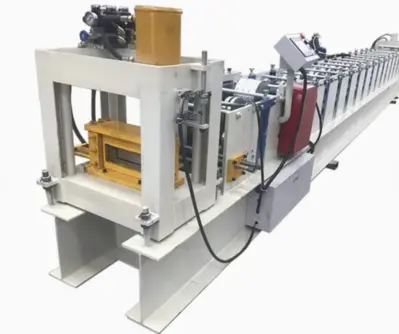

Formwork roll forming machines are essential for manufacturing construction formwork panels and profiles used in building concrete structures. These machines are engineered for precision, efficiency, and durability, making them indispensable in construction industries. Below is a comprehensive guide to the machine, its specifications, and a question-and-answer section for potential buyers in the USA.
Machine Description
A Formwork Roll Forming Machine is designed to produce high-quality metal profiles used for construction formworks, which provide support and shape for concrete during construction. These machines can handle various metals, including galvanized steel, stainless steel, and aluminum, tailored to meet the construction industry’s specific requirements.
The machine incorporates advanced automation, ensuring uniformity in profiles and reducing labor costs. With features like PLC control systems, servo motors, and hydraulic cutting mechanisms, it delivers precision and enhances productivity.
General Specifications
Material Compatibility:
Galvanized Steel: 0.8–3.0 mm thickness
Stainless Steel: 0.8–2.5 mm thickness
Aluminum: 1.0–2.0 mm thickness
Forming Speed:
Standard speed: 12–20 meters per minute
High-speed option: Up to 30 meters per minute
Roller Material:High-grade GCr15 steel with chrome coating for durability
Cutting System:Hydraulic cutting with mold customization for precise cutting
Forming Stations:12–24 stations, depending on profile complexity
Machine Dimensions:
Length: 10–15 meters
Width: 1.2–1.5 meters
Height: 1.2–1.5 meters
Power Supply:Standard: 380V/50Hz (customizable for U.S. 220V/60Hz)
Control System:PLC control system with touchscreen interface
Weight:8–12 tons, depending on configuration
Key Features
Automation: Fully automated operation for high efficiency.
Precision: Tight tolerances (+/- 0.2 mm) ensure consistent profiles.
Versatility: Capable of producing a range of profiles for different formwork systems.
Safety Measures: Equipped with safety guards and emergency stop functions.
Customization: Flexible tooling for specific profile designs.
Optional Add-Ons
Uncoiler and recoiler systems
Automatic stacker for finished profiles
Leveling system for material feeding
Remote PLC monitoring and control
Coil car for material loading
Applications
Formwork roll forming machines are widely used to manufacture:
Concrete formwork panels
Beams and column supports
Slab formworks
Modular formwork systems
These profiles are used in residential, commercial, and industrial construction projects across the USA.
Question and Answer Section
1. What materials can the Formwork Roll Forming Machine process?
The machine can process galvanized steel, stainless steel, and aluminum with thicknesses ranging from 0.8 mm to 3.0 mm, depending on the material type.
2. What is the average production speed of the machine?
The standard production speed is 12–20 meters per minute, with high-speed options available for up to 30 meters per minute.
3. Is the machine compatible with U.S. power standards?
Yes, the machine can be customized to operate on U.S. power standards (220V/60Hz).
4. Can the machine be customized for specific profile designs?
Absolutely. The machine’s tooling and dies can be tailored to produce profiles matching your unique formwork requirements.
5. How does the PLC control system benefit the operation?
The PLC control system automates the production process, ensuring precision, reducing errors, and allowing easy operation via a user-friendly touchscreen interface.
6. What are the maintenance requirements?
Regular lubrication of rollers and moving parts
Periodic inspection of hydraulic systems and cutting mechanisms
Ensuring the PLC system is free from dust and moisture
Checking alignment and tension of forming stations
7. Can the machine handle high-volume production?
Yes, the machine is designed for industrial-scale production and can handle high-volume manufacturing with consistent quality.
8. Is technical support available in the USA?
Most manufacturers offer technical support, including installation assistance, training, and maintenance services within the USA.
9. How much space does the machine require?
The machine typically requires a space of about 15 meters in length and 1.5 meters in width for installation and operation.
10. What are the safety features of the machine?
The machine comes equipped with safety guards, emergency stop buttons, and overload protection systems to ensure operator safety.
Specifications
