

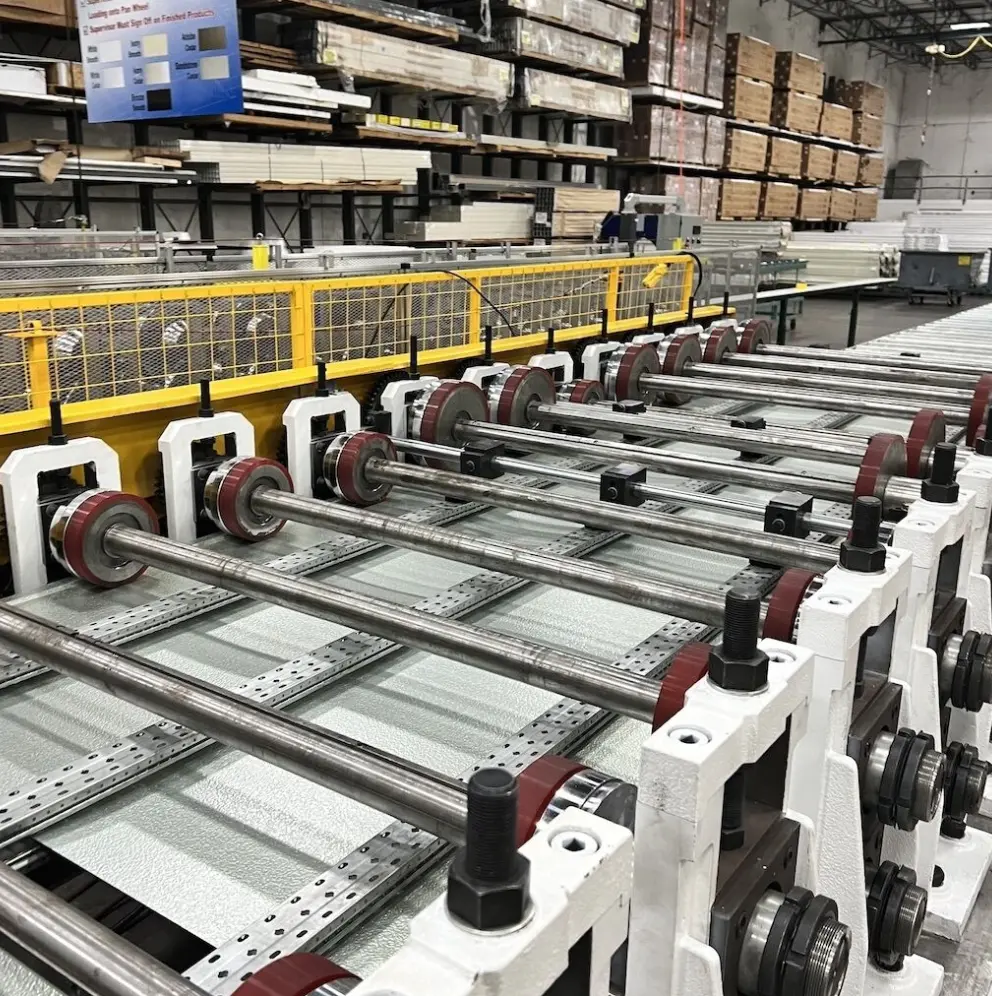
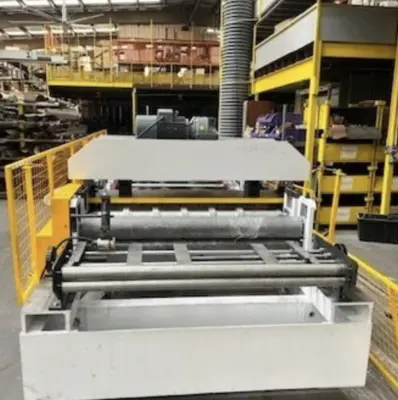
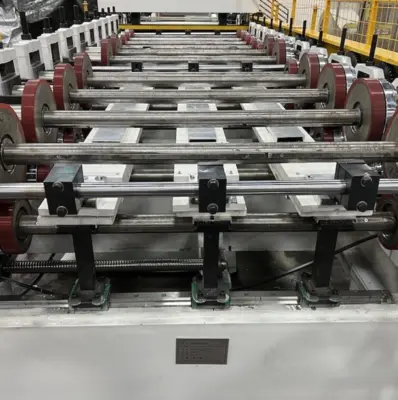
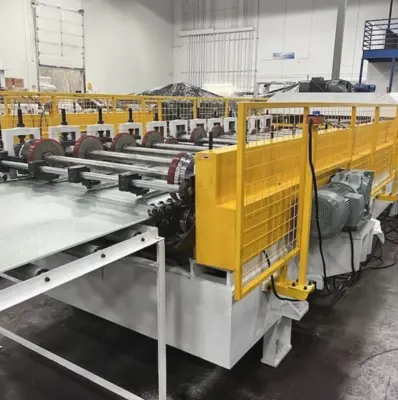

A Sandwich Panel Roll Forming Machine is a specialized equipment designed for the continuous production of insulated sandwich panels. These panels typically consist of an inner and outer metal sheet with a core insulating material such as polyurethane (PU), polyisocyanurate (PIR), expanded polystyrene (EPS), or mineral wool. Sandwich panels are widely used in the construction industry for roofing, walls, and cold storage facilities due to their excellent thermal insulation, lightweight properties, and durability.
The machine is engineered to form and assemble the layers seamlessly, ensuring high precision and quality in the final product. It is a critical piece of equipment for manufacturers catering to the demands of modern building and construction industries in the USA.
Benefits of Sandwich Panel Roll Forming Machines
Efficiency: High-speed production ensures quicker turnaround times.
Versatility: Customizable profiles and panel types cater to various applications.
Precision: Advanced PLC systems ensure consistent quality and minimize errors.
Cost-Effective: Reduced material wastage and efficient energy use.
Durability: Robust machine components ensure long-term reliability.
Applications of Sandwich Panels in the USA
Industrial Buildings: Factories and warehouses
Commercial Construction: Shopping malls, offices, and showrooms
Cold Storage: Refrigeration rooms and cold chain logistics
Residential Buildings: Prefabricated homes and modular constructions
Agricultural Buildings: Barns and storage units
Question and Answer Section
Q1: What types of core materials can this machine handle?
A1: The machine is capable of processing various core materials, including polyurethane (PU), polyisocyanurate (PIR), expanded polystyrene (EPS), and mineral wool. Customization options are available based on production needs.
Q2: What is the standard power requirement for the machine in the USA?
A2: The machine can be configured to meet the standard USA power supply of 480V, 60 Hz, 3-phase. Other configurations can also be tailored based on user requirements.
Q3: How customizable are the profiles produced by this machine?
A3: The machine is highly customizable, capable of producing roofing, wall, and specialized profiles to meet diverse industry needs.
Q4: What maintenance is required for this machine?
A4: Routine maintenance includes lubricating moving parts, cleaning rollers, checking the hydraulic and foaming systems, and ensuring all electrical connections are secure. Regular servicing every 6-12 months is recommended for optimal performance.
Q5: Can this machine produce fire-rated sandwich panels?
A5: Yes, the machine can produce fire-rated panels using mineral wool or fire-retardant PU/PIR cores, meeting USA building and safety standards.
Q6: What is the typical delivery time for this machine?
A6: Delivery times can range from 60 to 120 days depending on customization and production schedules.
Q7: Is training provided for operating the machine?
A7: Yes, manufacturers typically provide on-site training and detailed operation manuals. Remote assistance is also available.
Q8: Can I integrate this machine into an existing production line?
A8: Absolutely. The machine can be integrated with existing systems, and optional add-ons like stacking systems and conveyors can enhance compatibility.
This Sandwich Panel Roll Forming Machine is a valuable investment for manufacturers in the USA aiming to meet the growing demand for high-quality insulated panels in the construction and cold storage industries.
General Specifications:
Material Thickness (Outer/Inner Steel Sheet): 0.3 mm - 1.2 mmMaterial Width: Up to 1250 mm (customizable)Core Material: PU, PIR, EPS, or mineral woolCore Thickness: 20 mm - 200 mmPanel Length: Adjustable (up to 12 meters or more)Production Speed: 3-8 m/min (variable depending on the core material and panel thickness)Profile Types: Roof, wall, and customized profiles
Material Thickness (Outer/Inner Steel Sheet): 0.3 mm - 1.2 mm
Material Width: Up to 1250 mm (customizable)
Core Material: PU, PIR, EPS, or mineral wool
Core Thickness: 20 mm - 200 mm
Panel Length: Adjustable (up to 12 meters or more)
Production Speed: 3-8 m/min (variable depending on the core material and panel thickness)
Profile Types: Roof, wall, and customized profiles
Machine Components:
Decoiler: Hydraulic or manual with a capacity of 5-10 tonsRoll Forming Unit: High-precision rollers made of GCr15 steel with hard chrome plating for durabilityFoaming System: High-pressure PU/PIR injection system or EPS block feedingHeating and Laminating Section: Heating to activate adhesive bonding and laminationCutting System: Hydraulic or servo-controlled for precise length cuttingPLC Control System: Siemens or Mitsubishi PLC for automation and controlDrive System: Gearbox or chain drive with powerful motors
Decoiler: Hydraulic or manual with a capacity of 5-10 tons
Roll Forming Unit: High-precision rollers made of GCr15 steel with hard chrome plating for durability
Foaming System: High-pressure PU/PIR injection system or EPS block feeding
Heating and Laminating Section: Heating to activate adhesive bonding and lamination
Cutting System: Hydraulic or servo-controlled for precise length cutting
PLC Control System: Siemens or Mitsubishi PLC for automation and control
Drive System: Gearbox or chain drive with powerful motors
Power Supply:
Voltage: 380V, 50/60 Hz, 3-phase (customizable for USA standards: 480V, 60 Hz, 3-phase)Total Power: 50-120 kW depending on the machine model
Voltage: 380V, 50/60 Hz, 3-phase (customizable for USA standards: 480V, 60 Hz, 3-phase)
Total Power: 50-120 kW depending on the machine model
Optional Add-Ons:
Automatic stacking systemRemote PLC controlCoil car for feedingAutomatic material handling and conveyor systemsIn-line punching or embossing
Automatic stacking system
Remote PLC control
Coil car for feeding
Automatic material handling and conveyor systems
In-line punching or embossing
Safety Features:
Emergency stop buttonsEnclosed guards for moving partsOverload protection for electrical systems
Emergency stop buttons
Enclosed guards for moving parts
Overload protection for electrical systems
