


Introduction:
Gutter roll forming machines are essential for manufacturing gutters used in various roofing and water management applications. These machines streamline the production of continuous, seamless gutters, making them valuable assets for contractors and manufacturers involved in building construction, especially for residential and commercial roofing projects.
Machine Description
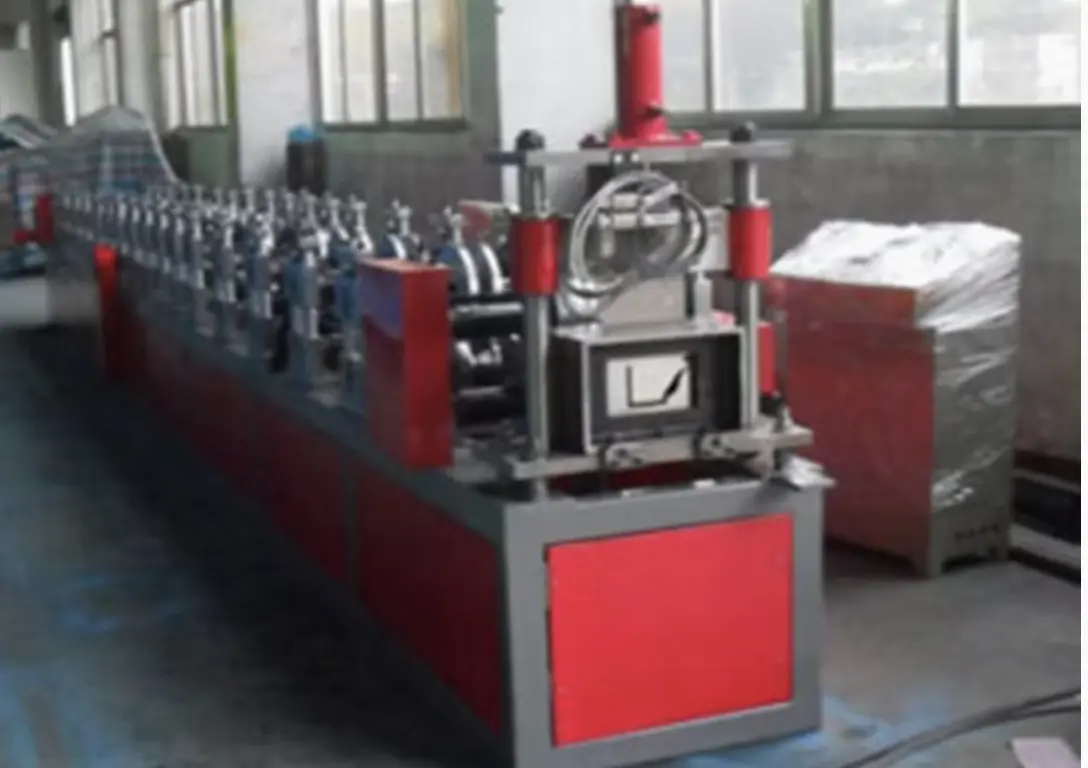
A gutter roll forming machine is specifically designed to produce seamless, customizable gutter profiles from metal sheets. It takes flat metal coils and feeds them through a series of rollers, shaping the material gradually into the desired gutter profile. These machines are typically used to produce aluminum, copper, steel, or galvanized steel gutters in a range of profiles, including K-style, half-round, and box gutters.
Applications:
Residential and commercial roofing
Building water management systems
Home improvement and renovation projects
Benefits:
Precision and consistency in gutter profiles
Faster production compared to traditional methods
Customizable for different profile types and materials
Reduced material wastage
Machine Components and Features
Decoiler: Holds and unwinds the metal coil for feeding into the rollers.
Roller Stations: A series of rollers gradually shape the metal sheet into the gutter profile.
Hydraulic Cutting System: Provides precise cutting for custom gutter lengths.
PLC Control System: Allows operators to set specifications, such as length and quantity, with ease.
Safety Guards: Enclose moving parts to protect operators from accidents.
Run-Out Table: Supports the finished product as it exits the machine.
Working Process
Loading the Coil: The metal coil is loaded onto the decoiler.
Feeding the Metal: The metal sheet feeds through the rollers, each progressively shaping it.
Cutting to Length: The machine cuts the gutter to the specified length using the hydraulic cutting system.
Exit and Collection: The finished gutter exits onto the run-out table for easy collection.
Question and Answer Section
Q1: What materials are compatible with a gutter roll forming machine?
A1: Most gutter roll forming machines are compatible with aluminum, galvanized steel, copper, and pre-painted steel. The machine can be customized to work with different thicknesses, but the most common range is 0.4 mm to 0.8 mm.
Q2: Can the machine produce different gutter profiles?
A2: Yes, most gutter roll forming machines can be equipped to produce different profiles, including K-style, half-round, and box gutters. Custom tooling is often required for specific profiles.
Q3: How much maintenance does a gutter roll forming machine require?
A3: Regular maintenance is crucial for longevity. Routine checks include lubrication of moving parts, inspection of rollers and cutting blades, and ensuring the alignment of components. Preventive maintenance will help avoid breakdowns and ensure the machine operates at peak efficiency.
Q4: What is the typical production speed?
A4: Production speed varies based on material type and profile, but most gutter roll forming machines can produce gutters at a rate of 10-20 meters per minute.
Q5: How long does installation and setup take?
A5: Installation usually takes a few hours to a day, depending on the complexity of the setup and additional features. Training for operators is often recommended and may take a few days for mastery.
Q6: Is it possible to automate the production process?
A6: Yes, with the PLC control system, you can automate gutter production by setting specifications for length, quantity, and profile type. Some models even offer remote operation capabilities for additional convenience.
Q7: Are safety features included in the machine?
A7: Absolutely. Standard safety features include emergency stop buttons, safety enclosures around moving parts, and sensors to detect anomalies during production.
Q8: Can the machine be customized for different voltage requirements?
A8: Yes, manufacturers typically offer customization for voltage and frequency requirements to fit regional standards, such as 380V, 50 Hz for European markets.
Q9: What extras are available with the machine?
A9: Extras can include decoilers, recoilers, run-out tables, and custom tooling for different profiles. Some machines also come with advanced PLCs and remote control systems for easier operation.
Conclusion:
A gutter roll forming machine is a valuable asset for gutter manufacturers, providing precision, efficiency, and flexibility for various gutter profiles. By understanding the machine’s specifications and operational benefits, manufacturers can make informed decisions to enhance productivity and meet specific customer requirements.
Materials: Aluminum, copper, galvanized steel, pre-painted steel
Material Thickness: 0.4 mm - 0.8 mm (varies based on material type and customer requirements)
Roller Material: Hardened steel with chrome plating for durability
Frame Structure: Heavy-duty steel frame to minimize vibration and enhance stability
Profile Types: K-style, half-round, box, and customized profiles
Machine Speed: 10-20 meters per minute (variable, depending on material and profile complexity)
Cutting System: Hydraulic or servo cutting for precise length cuts without deforming the profile
Drive System: Gearbox-driven, chain, or hydraulic, depending on the model
Control System: PLC control with touch-screen HMI for easy adjustments and control
Power Requirements: 380V, 50 Hz, 3-phase (customizable based on customer needs)
Length Measurement System: Encoder-based for accurate length measurements
Safety Features: Emergency stop buttons, protective enclosures, and safety sensors
Extras: Decoiler, recoiler, run-out tables, and customizable tooling for different profiles
