

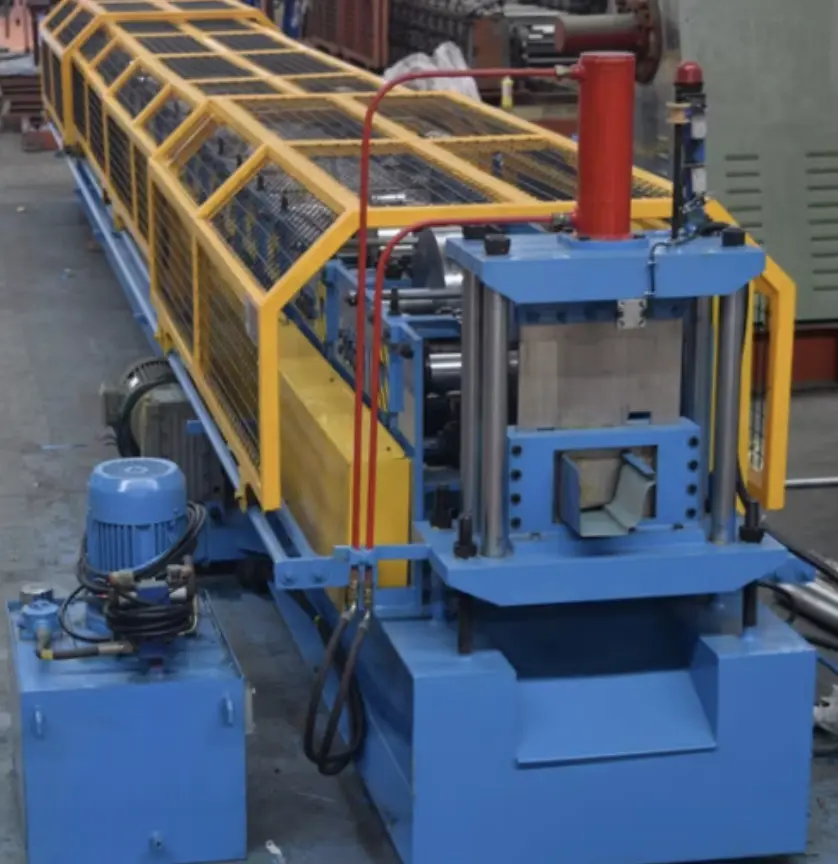
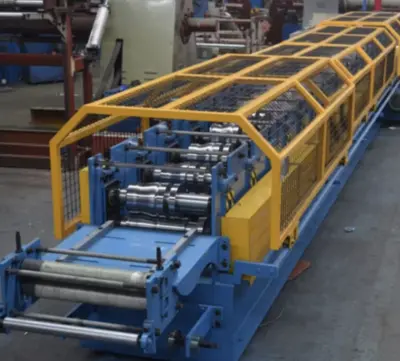

Gutter roll forming machines are specialized equipment designed to produce seamless gutters for residential, commercial, and industrial applications. These machines take metal coils, usually made from materials like aluminum, steel, or copper, and shape them into continuous gutter profiles that can be cut to desired lengths on-site. Gutter roll forming machines are essential for companies in the construction and roofing industries looking to provide custom-fit, durable, and efficient gutter systems.
Machine Description
A gutter roll forming machine transforms flat metal coils into various gutter profiles through a series of rollers. Each roller set gradually bends the metal to form the shape of a gutter. These machines can produce various profiles such as K-style, U-shape, half-round, and box-type gutters, depending on the machine setup. Gutter roll forming machines are compact, mobile, and designed to handle the high demands of gutter production, especially for custom lengths on job sites.
1. Roller Materials
Material: High-quality hardened steel
Coating: Chrome or other durable coatings for corrosion resistance and longer life
Roller Diameter: Varies depending on gutter profile
2. Frame Size
Construction: Heavy-duty welded steel
Dimensions: Typically customized based on specific gutter profile requirements
Thickness: Strong enough to maintain stability during high-speed operation
3. Motors
Drive Motor Power: Ranges from 5-10 HP depending on the model
Hydraulic Motor Power: Varies for cutters and bending mechanisms, usually between 3-5 HP
4. Control System (PLC)
Type: Programmable Logic Controller (PLC)
Interface: Touchscreen control panel for easy operation and settings adjustments
Features: Automated cut-to-length, speed adjustments, and error diagnostics
5. Machine Speed
Production Speed: 10-15 meters per minute
Speed Adjustment: Controlled via PLC to match the production demand
6. Cutting System
Type: Hydraulic cutting system
Blade Material: Hardened steel or alloy to ensure clean cuts and durability
Cut-to-Length Precision: ±1 mm
7. Profile Types and Sizes
Gutter Profiles: K-style, U-shape, half-round, and box gutters
Material Thickness: 0.5-1.2 mm (varies by model and material)
Materials Used: Aluminum, steel, copper, or coated metals
8. Safety Features
Emergency Stop: Standard emergency stops at key points
Safety Guards: Protective guards around rollers and cutters
Overload Protection: Automatic shutdown in case of overload
9. Extras
Decoilers and Recoilers: For managing metal coils efficiently
Stackers: For organized stacking of finished gutters
Remote Control: Option to operate certain machine functions remotely
Machine Setup and Installation
Setting up a gutter roll forming machine involves a few key steps:
Positioning: Place the machine on a stable, level surface.
Feeding the Coil: Load the metal coil onto the decoiler, aligning it with the entry guide.
Setting Controls: Adjust the PLC settings for gutter profile, speed, and cut length.
Running the Machine: Test-run to ensure proper shaping and cutting before starting full production.
Adjustments: Fine-tune the machine if necessary to ensure the gutter dimensions and quality meet specifications.
Maintenance Requirements
To ensure optimal performance and longevity, routine maintenance is essential for gutter roll forming machines:
Daily Inspections: Check for wear on rollers, blade sharpness, and proper alignment.
Lubrication: Regularly lubricate rollers, bearings, and moving parts.
Clean Rollers: Keep rollers free of debris and dust to prevent marking on metal.
Hydraulic Fluid: Periodically check and refill hydraulic fluid levels.
Electrical Components: Inspect wiring and PLC connections for any signs of wear or damage.
Question and Answer Section
Q1: What materials can a gutter roll forming machine process?
A1: Most gutter roll forming machines can process aluminum, steel, and copper. The choice depends on the desired gutter strength, durability, and resistance to corrosion.
Q2: Can one machine produce different gutter profiles?
A2: Yes, many machines are designed to produce multiple gutter profiles. However, switching profiles often requires changing roller setups or using add-ons.
Q3: What power supply is needed for these machines?
A3: Gutter roll forming machines generally require a 3-phase power supply, typically 220V or 380V, depending on the machine’s motor specifications.
Q4: What’s the typical production speed for a gutter roll forming machine?
A4: Standard production speeds range from 10-15 meters per minute, depending on the machine’s model and material type.
Q5: Is it possible to operate the machine remotely?
A5: Yes, some models offer remote control capabilities for basic functions, allowing operators more flexibility on job sites.
Q6: How precise is the cut-to-length function?
A6: Most machines have a cut-to-length precision of ±1 mm, which is suitable for creating seamless, uniform gutter sections.
Q7: Are these machines suitable for mobile use on job sites?
A7: Yes, many gutter roll forming machines are compact and designed for on-site operation, making them ideal for mobile gutter installation services.
Q8: What is the average maintenance cost?
A8: Maintenance costs depend on machine usage, but routine costs typically include lubricants, replacement rollers (as they wear), and hydraulic fluids, making it manageable with regular upkeep.
Specifications
