

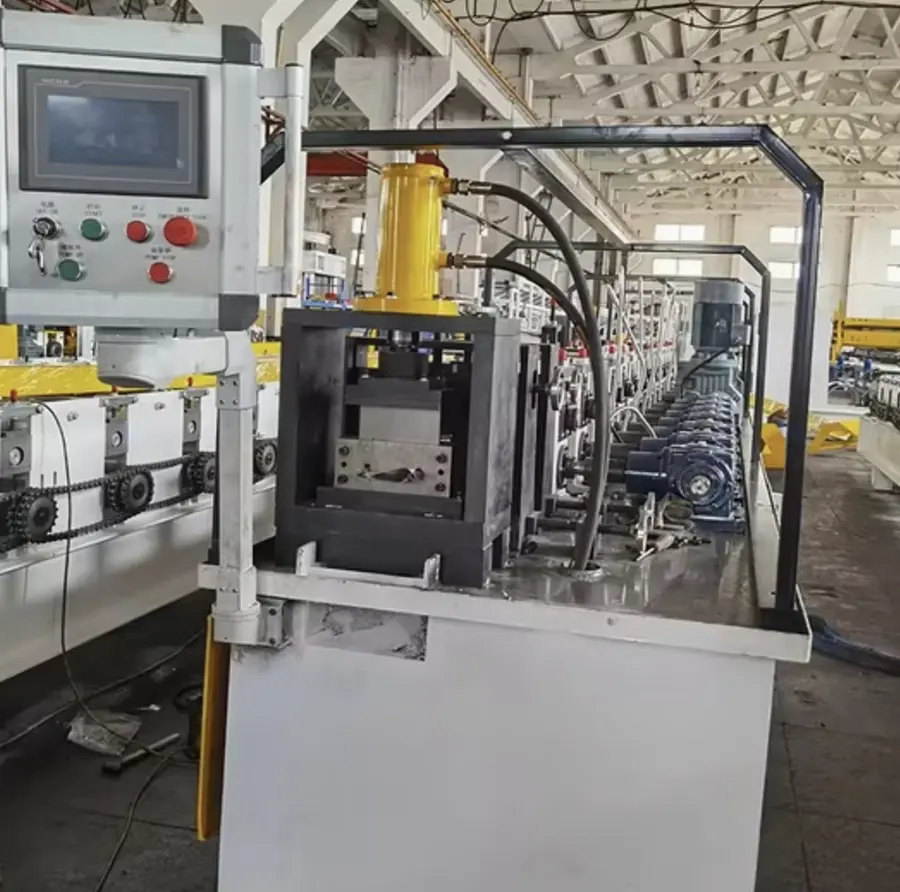
Garage Door Roll Forming Machine in Canada
Overview
Garage door roll forming machines are specialized equipment designed to produce high-quality, precisely shaped metal panels and sections used in the construction of garage doors. These machines are essential for manufacturers looking to achieve consistency, efficiency, and durability in their production processes. In Canada, where weather conditions demand sturdy and insulated garage doors, the demand for roll forming machines that produce such profiles is consistently high.
Machine Description
A garage door roll forming machine fabricates metal panels and tracks used in garage doors. The equipment processes pre-painted steel, galvanized steel, or aluminum coils, forming them into the desired shapes. The machine integrates advanced technology, ensuring precise cutting, punching, and profiling.
Features like automatic coil feeding, servo-driven motors, and hydraulic cutting ensure smooth operation and high production efficiency. Additionally, optional features such as embossing rollers and insulation material applicators can be added for versatility.
Profile Description
Materials: High-strength steel, aluminum for durability and corrosion resistance
Sizes: Standard garage door panels with widths of 200 mm to 500 mm
Material Gauge: 24 to 18 gauge
Applications: Residential and commercial garage doors
Popular Countries: Canada, USA, UK, Australia (due to extreme weather conditions and durability requirements)
Setup and Installation
Site Preparation: Ensure the workspace has adequate space, stable power supply (often 3-phase 380V, 50Hz in Canada), and safety precautions.
Machine Placement: Position the machine on a flat, vibration-free surface.
Coil Loading: Use a coil car or uncoiler to load the raw material coil onto the machine.
Calibration: Adjust the rollers and punch alignment for the desired profile.
Test Run: Perform a test run with a sample coil to ensure accuracy and troubleshoot any issues.
Operation: Once calibrated, begin full-scale production.
Maintenance Requirements
Regular lubrication of moving parts
Periodic cleaning of rollers and dies
Checking and replacing hydraulic oil every 6–12 months
Inspecting and tightening loose bolts or connections
Ensuring PLC software updates are current
Q&A Section
Q1: What are the benefits of using a garage door roll forming machine in Canada?
Answer: These machines provide precision, efficiency, and consistency, making them ideal for manufacturing high-quality garage doors that can withstand Canada’s harsh weather conditions.
Q2: Can the machine handle insulated panels?
Answer: Yes, many garage door roll forming machines come with optional insulation applicators for adding thermal or acoustic insulation during the manufacturing process.
Q3: What material thickness is suitable for garage door panels?
Answer: Common material thickness ranges from 0.4 mm to 1.2 mm, depending on the application (residential or commercial).
Q4: What is the average production speed?
Answer: The production speed is typically between 12–20 meters per minute, though it can vary based on the machine configuration.
Q5: Are there any specific certifications required for operating this machine in Canada?
Answer: While no specific certifications are mandatory, compliance with CSA (Canadian Standards Association) and electrical safety standards is often required.
Q6: How can I ensure long-term durability of the machine?
Answer: Regular maintenance, including lubrication, cleaning, and inspection of hydraulic and electrical systems, will ensure the machine operates efficiently for years.
Conclusion
Garage door roll forming machines are essential for businesses in Canada aiming to manufacture durable and high-quality garage doors. With their advanced specifications and capabilities, these machines cater to the growing demand for energy-efficient and robust garage door panels. By understanding the specifications, setup, and maintenance requirements, manufacturers can maximize productivity and ensure long-term success in their operations.
Specs
Material Type: Pre-painted steel, galvanized steel, aluminum
Material Thickness: 0.4 mm to 1.2 mm
Material Width: 200 mm to 600 mm (varies by profile)
Roller Materials: High-grade 45# steel or Cr12 steel, heat-treated
Number of Forming Stations: 15 to 25 stations (depending on the profile)
Machine Speed: 12–20 meters per minute
Cutting System: Hydraulic cutting with high precision
Punching System: Servo-driven or hydraulic punching (for locks or track holes)
Motor Power: 7.5 kW to 15 kW
PLC System: Siemens or Delta for user-friendly operation
Machine Frame: Steel welded structure with robust design
Optional Features: Embossing rollers, insulation applicator, remote control system
Explore More New Equipment Listings on Equipt
Browse related New Door Machines, Misc Equipment (Woodworking), Misc Equip, Parts & Accessories (Woodworking), and Woodworking equipment, including N/A machines for sale on Equipt.
Sell Your Used Equipment
Find dedicated pages to sell used Door Machines, Misc Equipment (Woodworking), Misc Equip, Parts & Accessories (Woodworking), Woodworking, and N/A equipment on Equipt.