

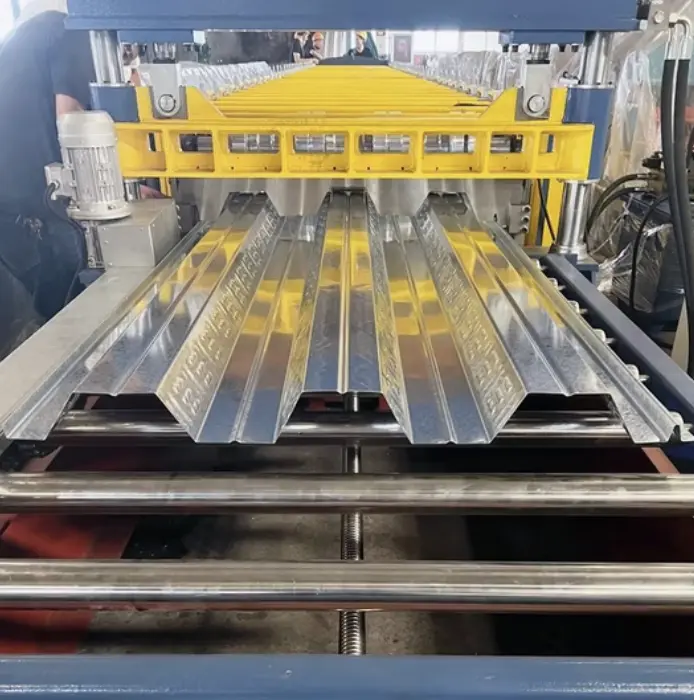
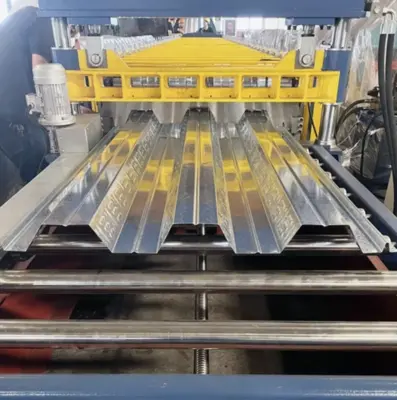
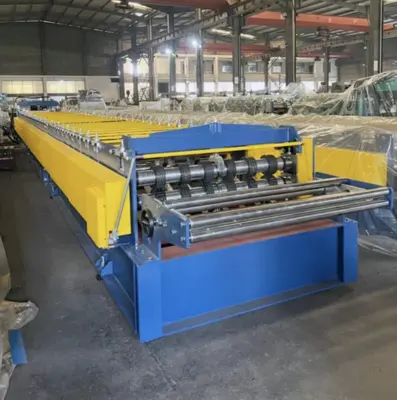
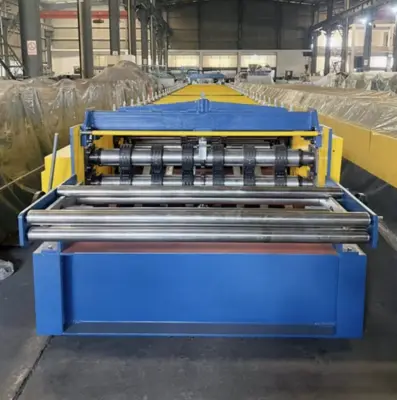

A metal deck roll forming machine is a specialized equipment designed to produce metal deck panels, which are widely used in the construction industry for roofing, flooring, and mezzanine structures. These machines transform coiled sheet metal into precisely formed profiles that offer high structural strength and durability, making them essential for modern construction projects.
In the USA, the demand for metal deck roll forming machines is growing due to increased infrastructure projects and commercial construction needs. This blog covers everything you need to know about these machines, including specifications, key features, and a Q&A section.
Machine Description
A metal deck roll forming machine is engineered to handle high-volume production with superior precision. It consists of robust components like rollers, cutting mechanisms, and a PLC control system that ensure seamless and efficient operation.
Key Features:
High Precision Rollers: Designed to shape metal sheets accurately into deck profiles.
Hydraulic Cutting System: Ensures clean, burr-free cuts with minimal wastage.
PLC Control System: Allows for easy operation and automation, reducing manual intervention.
Customizable Profiles: Can produce various deck designs, including standard and custom profiles.
Durability: Constructed with heavy-duty frames and high-quality components for long-term performance.
Applications in the USA
Commercial Buildings: Metal decking is used for roofing and flooring systems in malls, warehouses, and office complexes.
Residential Projects: High-rise apartments use metal decks for flooring and mezzanines.
Industrial Structures: Factories and workshops require durable metal decks for flooring systems.
Infrastructure Projects: Bridges and highways often use metal decking in structural frameworks.
Setup and Installation Process
Preparation: Ensure a flat, stable surface for the machine's installation.
Alignment: Position the rollers and cutting system to match the required profile dimensions.
Electrical Setup: Connect the PLC and motors to the power supply as per USA voltage standards.
Testing: Run test sheets to calibrate speed, thickness, and profile accuracy.
Full Production: Begin large-scale production once all parameters are verified.
Maintenance Requirements
Regular Cleaning: Remove dust and debris from rollers and cutting systems.
Lubrication: Apply oil to moving parts for smooth operation.
Inspection: Check for wear and tear on rollers, motors, and the hydraulic system.
Software Updates: Ensure the PLC system is up-to-date for optimal performance.
Question and Answer Section
Q1: What materials can the metal deck roll forming machine process?
A: The machine can process galvanized steel, pre-painted steel, aluminum, and stainless steel with thicknesses ranging from 0.7 mm to 1.5 mm.
Q2: How customizable are the profiles?
A: Profiles can be fully customized to meet specific project requirements, including different widths, patterns, and depths.
Q3: Can the machine operate under USA power standards?
A: Yes, the machine can be configured for 220V/60Hz or 380V/50Hz to comply with USA standards.
Q4: What is the production capacity of the machine?
A: The machine operates at speeds of 15–25 meters per minute, making it suitable for high-volume production.
Q5: Are there any optional features available?
A: Yes, optional features include automatic stackers, uncoilers, recoilers, and remote PLC systems for enhanced functionality.
Q6: What industries in the USA commonly use metal decking?
A: Construction, infrastructure development, and industrial manufacturing are the primary industries using metal decks.
Conclusion
The metal deck roll forming machine is an essential investment for businesses in the USA involved in construction and infrastructure projects. With its precision, efficiency, and customizable options, this machine ensures high-quality production tailored to industry needs. By understanding the specifications, setup, and maintenance processes, you can maximize your machine's performance and lifespan.
Material: Galvanized steel, pre-painted steel, aluminum, or stainless steel
Material Thickness: 0.7 mm to 1.5 mm (customizable)
Profile Width: 600 mm to 1500 mm (varies based on requirements)
Roller Material: High-grade chrome-coated steel
Number of Rollers: 16–24 stations (varies based on profile complexity)
Frame Size: 400–600 mm H-beam
Motor Power: 15–30 kW (depending on profile size and machine speed)
Machine Speed: 15–25 meters per minute (adjustable)
Control System: PLC system with touchscreen interface
Cutting Type: Hydraulic cutting with servo control
Power Supply: 380V/50Hz or 220V/60Hz (customized for USA requirements)
Dimensions: Length: 8–12 meters, Width: 1.5–2.5 meters, Height: 1.5–2.2 meters
Weight: Approximately 10–15 tons
Optional Features: Automatic stackers, remote PLC systems, uncoilers, recoilers, and leveling units
